
The Jeep Super Wagoneer: The Forgotten Father of Luxury SUVs
In 1966, a buyer who walked into a Jeep dealership expecting rugged, simple machinery would have stopped cold. Sitting under the showroom lights was something different: a wide-grille wagon with elegant woodgrain trim, a console-mounted automatic shifter, air conditioning, and power-assisted controls. Was this really a Jeep? And was this the exact moment when the luxury sport utility vehicle was born?
Many automotive historians would later say yes. The Jeep Super Wagoneer is often described as the first true luxury SUV, offering better comfort and value than the military-flavored machines Land Rover was selling at the time. It created a formula that still defines full-size luxury SUVs in 2026: a genuinely capable chassis wrapped in a spacious, almost car-like cabin.
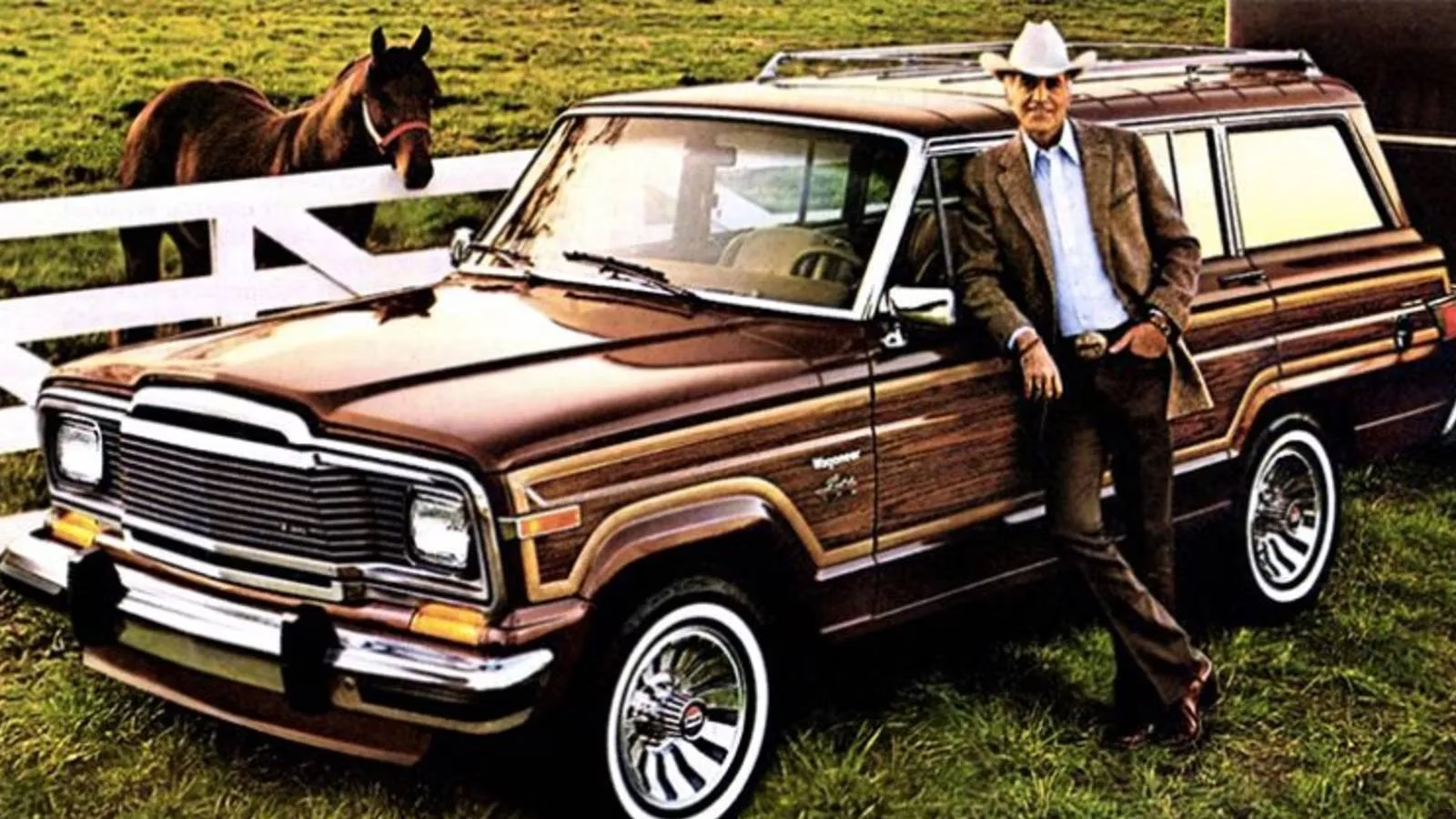
From Basic Wagon to Quiet Revolutionary
The original Wagoneer arrived in 1963 and stayed in production for more than thirty years. It kept essentially the same honest body style for decades, much like the Mercedes-Benz G-Class would do later. Early Wagoneer models used a 3.8-liter six-cylinder engine that was reasonably fuel-efficient for the era, while later versions received new engines and mechanical updates.
What made the Wagoneer special was how it combined genuine off-road ability with everyday usability. Some of its most important features included:
-
Standard independent front suspension on rear-wheel-drive models
-
Double-wishbone front suspension design
-
Power brakes and air conditioning
-
Foldable rear seats and a foldable passenger seat
-
A large cargo area that made the wagon genuinely practical
But the truly revolutionary detail was hidden in the drivetrain. Jeep paired an automatic transmission with a true 4x4 system, something practically unheard of at the time. While other utilities still felt like trucks inside, the Wagoneer felt closer to a comfortable American sedan—just one that could claw its way through mud and snow.
The Super Wagoneer Steps Into the Spotlight
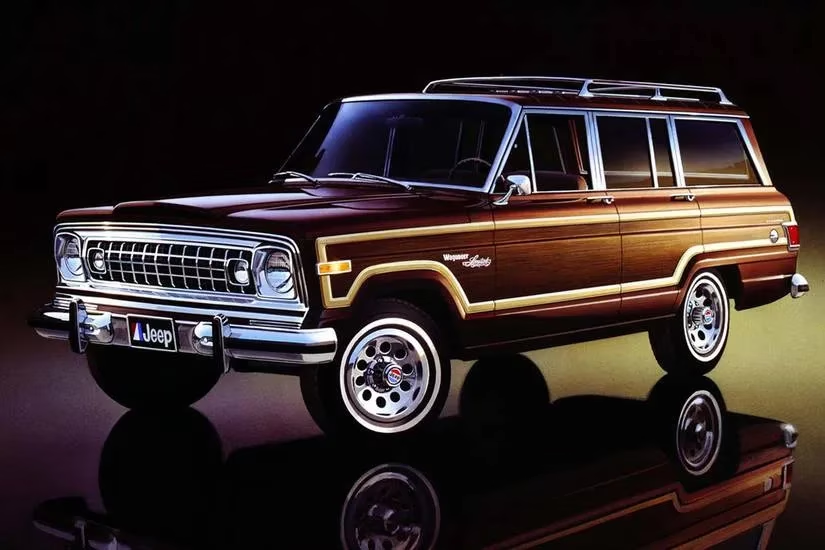
In 1966, Jeep turned up the glamour with the Super Wagoneer. It was a limited-production model, much like today's Grand Wagoneer or Grand-series Jeeps, and it wore a wider grille that met round headlights rather than the boxy lights used on earlier Wagoneers.
Under the hood sat a high-performance version of AMC's V8, known as the Vigilante engine. This 327 cubic-inch unit used a four-barrel carburetor to produce 270 horsepower. It was supplied to Kaiser-Jeep from 1965 to 1967 and appeared in both the Wagoneer SUV and the Gladiator pickup truck.
The Super Wagoneer did not stop at engine upgrades. It came standard with air conditioning, power steering, power brakes, a console-shifted automatic transmission, an electric rear tailgate window, tilt-adjustable steering, and even map lights. The woodgrain trim stretched across the fenders, doors, and rear quarter panels, giving the vehicle an elegant look that was unusual for the segment. A push-button radio added another premium touch.
Buyers in 1966 had just four exterior colors to choose from:
| Color | Character |
|---|---|
| Empire Blue | Deep and formal |
| Indian Ceramic | Warm off-white |
| Glacier White | Bright and clean |
| Prairie Gold | Earthy golden tone |
Why Does a Nearly Sixty-Year-Old SUV Still Matter?
The Super Wagoneer was not just a luxurious curiosity. It proved that buyers would pay for comfort, convenience, and capability wrapped into one vehicle. Later Wagoneer models continued the idea. The 1978 Limited Edition added power seats, more sound insulation, cruise control, power windows, and additional safety equipment—features that eventually became expected in the segment.
There was also an amusing historical footnote: the Wagoneer remained one of the last vehicles to use carburetors until late production models in 1991, long after fuel injection had become common.
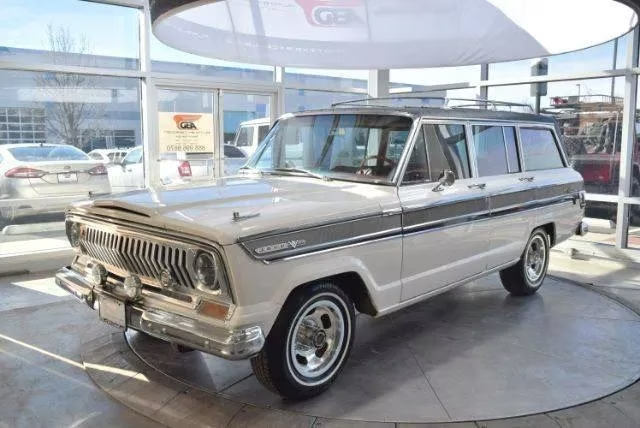
Today, finding an original, rust-free Super Wagoneer is a treasure hunt. Decades of weather and road salt have claimed many examples. When a solid one appears, Jeep enthusiasts are eager to restore it. One fully restored 1966 Jeep Super Wagoneer was listed for sale at $89,990, a reminder that the original luxury SUV now commands collector-grade money.
By 2026, the Wagoneer nameplate has returned as a modern family of SUVs, including the revived Wagoneer and Grand Wagoneer. The new models are packed with screens, advanced safety systems, and electrified options, but their mission still echoes the 1966 original: offer luxury without giving up capability. What other 1960s vehicle can claim to have created a category that now dominates driveways around the world?
Leave a Comment
Comments