
Tesla Model X in 2026: A Retrospective on Its Most Annoying Owner Complaints
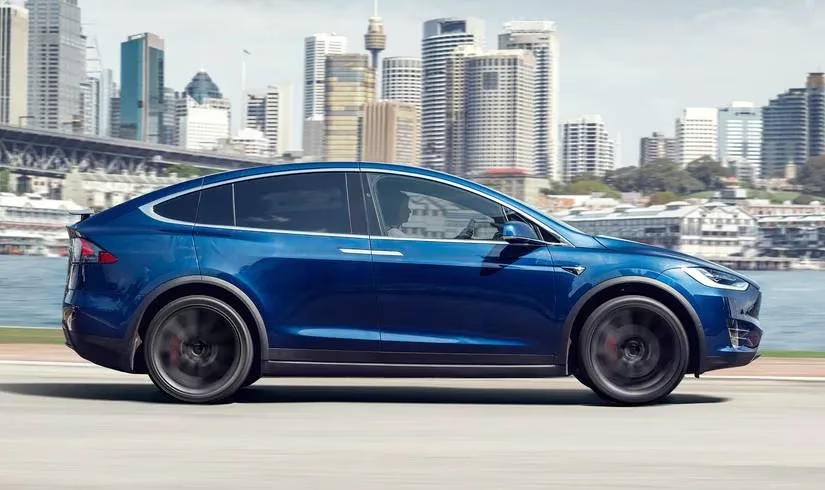
When Tesla first rolled onto the global auto stage, it did more than sell cars. It forced legacy automakers to rethink hybrids and electric drivetrains. The Roadster proved that EVs could be quick and luxurious. Then came the Model X, an SUV with falcon wing doors, a giant windshield, and a futuristic touchscreen. It was unlike anything else on the road. It also became a magnet for complaints. By 2026, many of those early issues are part of Tesla folklore, but for anyone shopping for a used Model X, they still matter. The SUV has a personality that can charm and frustrate in equal measure. 😅
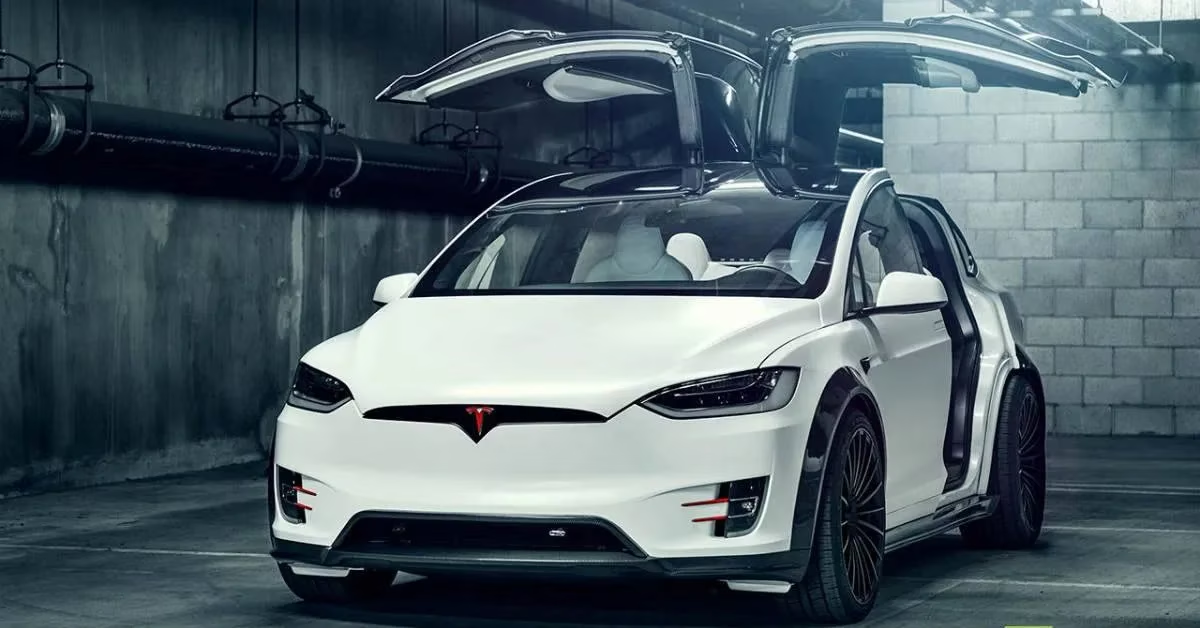
Falcon Wing Doors With a Mind of Their Own
The falcon wing doors were supposed to be a parenting hack. They open upward, making it easier to load kids into child seats. In practice, owners complained that the doors did not behave. Some opened without warning. Others closed by themselves. Tesla reportedly fired and sued its initial door supplier, but owners remained unhappy. The doors became a symbol of the Model X's over-engineering. Here's the kicker: a feature meant to simplify family life often added stress.
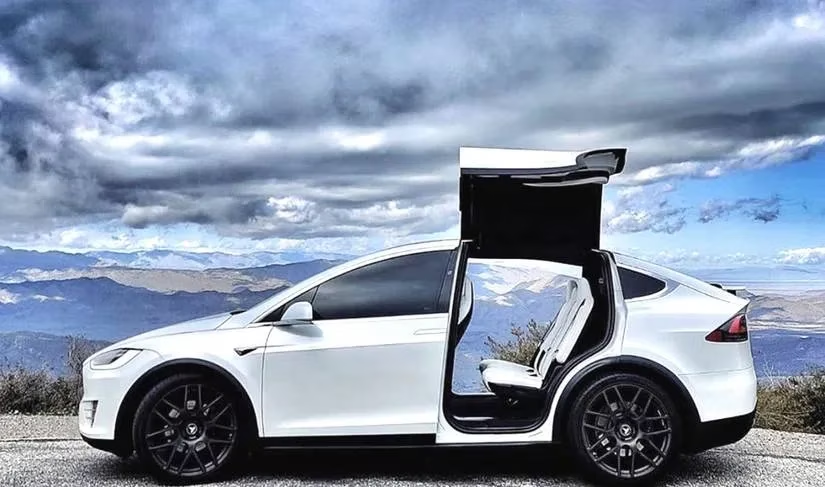
Suspension Rattles and the 2016 Complaint Wave
Of all Model X model years, 2016 was the most problematic. NHTSA records showed 191 complaints. As many as 73 involved suspension issues. Owners reported a rattling noise. One customer said the problem should have been fixed when the upper control arm was replaced. It wasn't. The suspension started to sing a rattling tune that service centers could not always silence. For a vehicle priced like a luxury SUV, that kind of noise is hard to ignore.
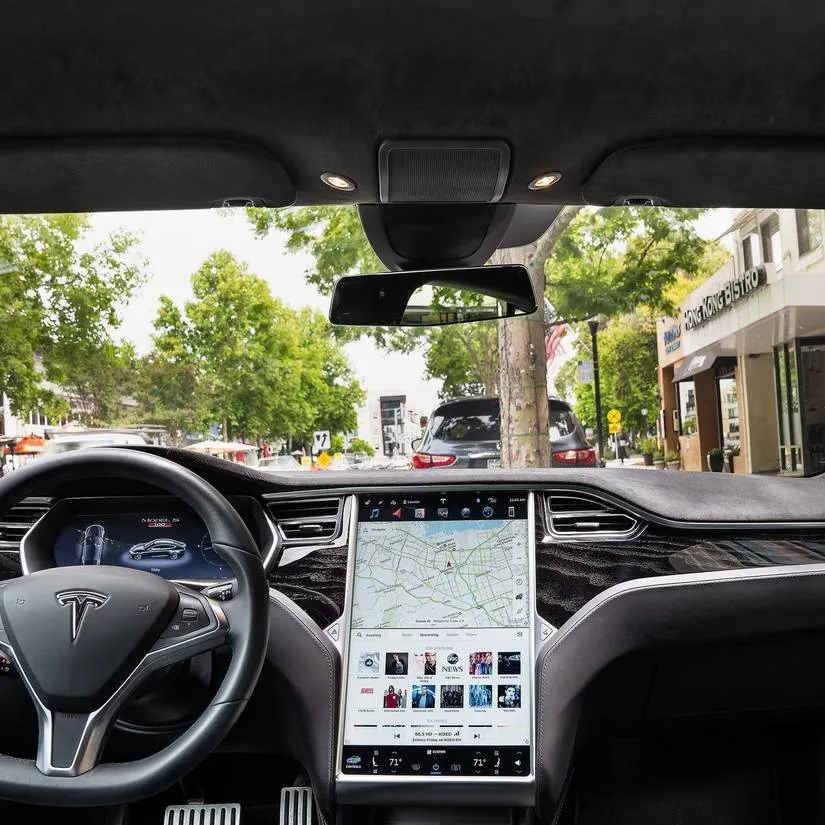
Touchscreen Freezes and MCU Failures
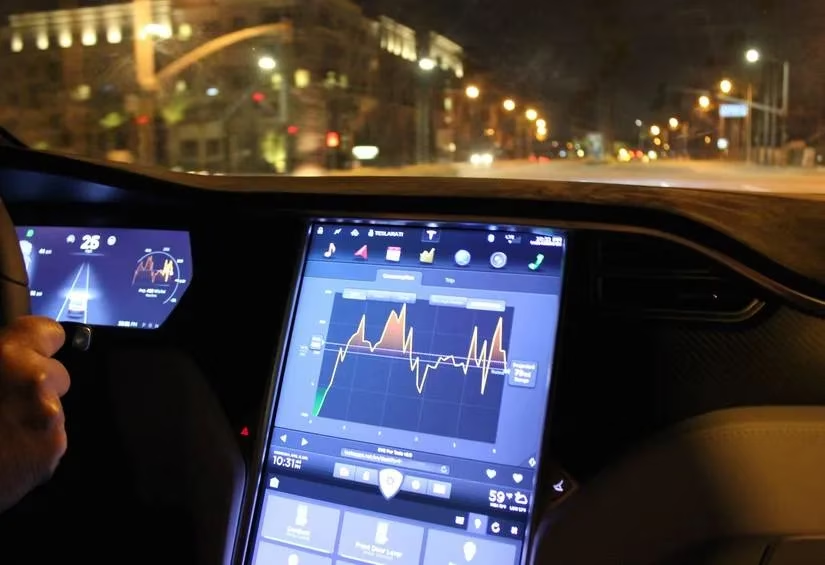
Tesla was proud of the Model X's two displays: a driver screen and a 17-inch touchscreen. Owners were less impressed when the touchscreen froze or went black without warning. The Media Control Unit, which controls settings, music, navigation, climate, and even Easter eggs, also failed for some. Drivers lost access to autopilot, navigation, AC, and radio. In other words, the car's brain took an unscheduled nap. By 2026, screen reliability is table stakes, but early Model X units showed how fragile software-defined cars could be. Some owners said they could no longer play music. Others simply lost the fun factor that Tesla loved to advertise.
Windows, Safety Features, and Autopilot Gremlins
Owners also complained about windows that refused to open or close fully, or that became misaligned. In a Tesla Motors Club forum, some said the windows would not close completely or even open. Safety and driving assistance features sometimes disabled themselves. One complaint said the backup camera failed, and the car lost turn signals and emergency signals. Autopilot, a headline feature, refused to work in some 2016, 2017, and 2018 units. Some screens displayed "Autopilot Features Limited." That's a tough pill to swallow for a car marketed as one of the safest SUVs ever.
Ghosting, Steering, and Unintended Acceleration
The massive windshield caused "ghosting," a double-vision effect where oncoming headlights appeared as two sets. When made aware, Tesla did not seem alarmed. It said reflections occur in all laminated glass. Steering complaints appeared for 2016 through 2019 models. One owner saw a "Power steering failure" message. Others reported sudden steering lockup. In February 2020, a recall covered 2015 and 2016 Model X cars for reduced or complete loss of steering assist. Then there were unintended acceleration claims. Tesla maintained that its data showed the car operated as designed. Owners told a different story, sometimes with crash damage to prove it.
What This Means for a 2026 Used-Car Shopper
The Model X remains a technological landmark. It made electric SUVs desirable and proved that software could define a vehicle. But its early years were messy. A used Model X can be a bargain, but it can also be a project car. Buyers should check recall history, service records, door operation, suspension noise, screen responsiveness, and software updates. A pre-purchase inspection by a Tesla specialist is smart. Check the door sensors, the suspension bushings, the MCU version, and whether the car has been updated to newer software. Also verify open recalls. Tesla has improved many systems over time, yet the ghost of early quality issues still haunts older VINs. Talk about a mixed bag. For some owners, the Model X is a beloved spaceship. For others, it is a cautionary tale. In 2026, both stories are true. The Model X was never boring. It was a bold experiment, and it remains a reminder that innovation and reliability do not always arrive on the same schedule.
Leave a Comment
Comments