
SpeedKore’s 1970 Carbon Fiber Charger “Evolution” Packs 966 HP Demon Power
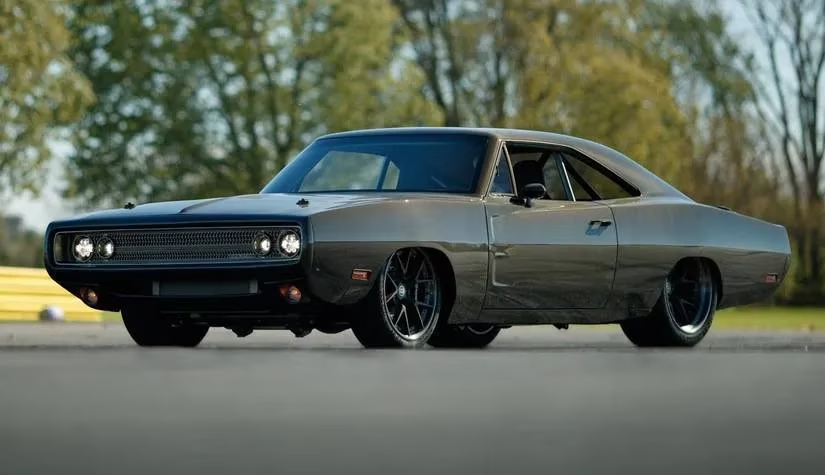
Back in 2018, the annual SEMA Show in Las Vegas became the stage for one of the most spectacular restomod transformations the muscle car world had ever seen. Wisconsin-based SpeedKore Performance, already legendary for weaving carbon fiber into Detroit iron, wheeled out a 1970 Dodge Charger that looked like it had been transported straight from the future. Named simply “Evolution,” the Charger was a rolling testament to the shop’s ability to blend classic lines with aerospace-grade materials and monstrous modern power.
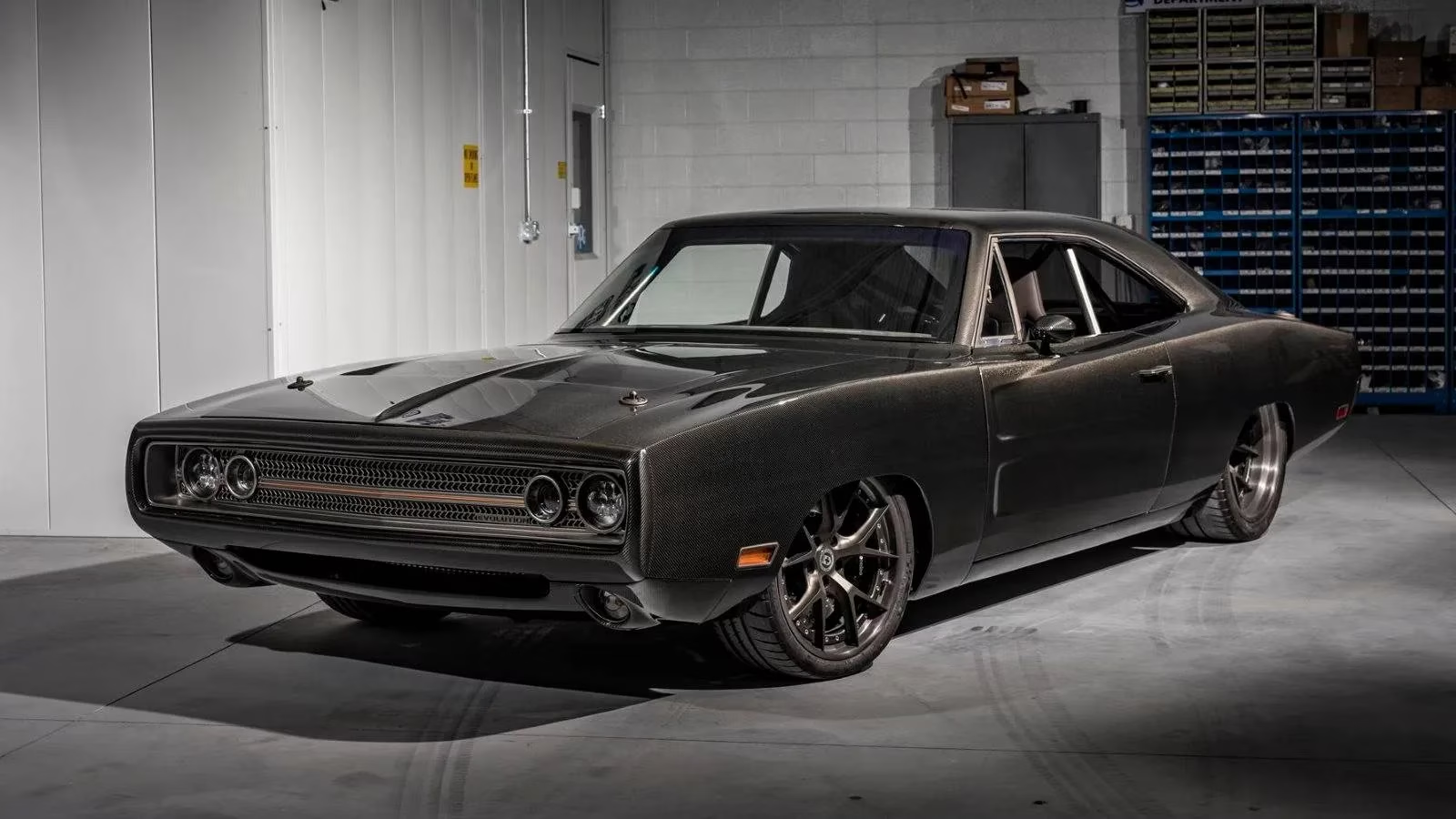
SpeedKore had already stunned audiences with carbon fiber Mustangs, Hellcats, and even an entire Dodge Demon rendered in the lightweight weave. The Evolution, however, carried a different emotional weight. It was the successor to “Tantrum,” the notorious Charger that appeared in multiple Fast and Furious films, famously surviving cinematic destruction. While Tantrum relied on a monstrous 9.0‑liter Mercury Racing twin‑turbo V8 pushing 1,650 horsepower, its successor took a more focused, albeit still outrageous, approach. The goal was not merely brute force but a harmonious fusion of old-school silhouette and modern supercar engineering.
💨 Heart of a Demon, Soul of a Lightweight
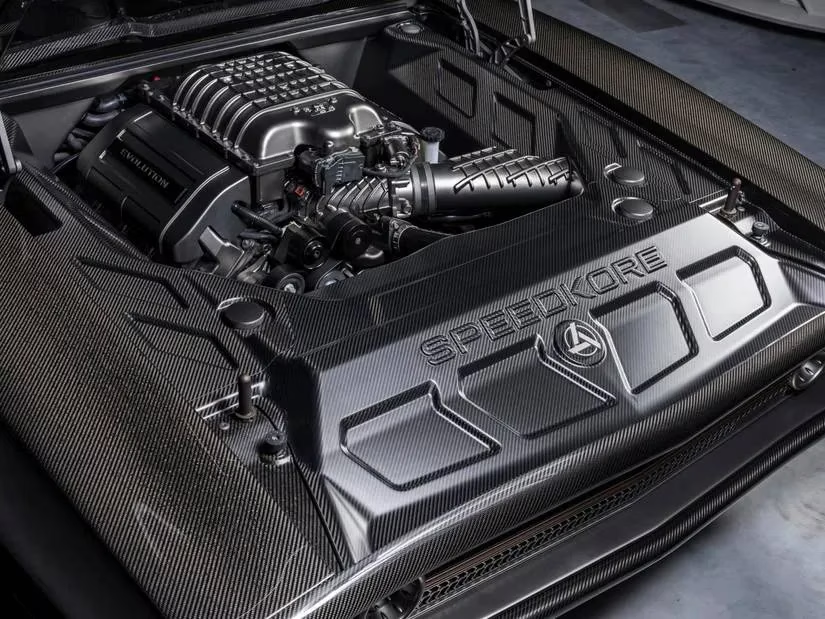
Nestled under the black carbon hood is a 6.2‑liter HEMI V8—the same engine that made the 2018 Dodge Challenger SRT Demon a quarter‑mile legend. From the factory, that blower‑fed powerplant delivered 840 horsepower. SpeedKore’s engineers weren’t satisfied. Through a meticulous reworking of the induction and exhaust systems, the team extracted an additional 126 ponies, bringing the total to a tire‑shredding 966 hp. The upgrades included:
-
⚙️ A smaller, lightweight supercharger pulley for increased boost
-
💉 High‑flow fuel injectors to feed the hungry combustion chambers
-
🌀 Custom cold‑air intake with a ram‑air effect molded into the carbon hood
-
🔥 Stainless steel long‑tube headers that scavenge exhaust gasses more efficiently
-
🛢️ Dailey Engineering dry sump oil system to maintain lubrication under extreme cornering loads
-
❄️ Upgraded oil cooler and a Saldana radiator to keep temperatures in check
-
📢 SLP‑tuned custom exhaust that delivers a guttural, unmistakably American V8 roar
The power gains are not just numbers on a dyno sheet. They represent the philosophy that every part of a build should communicate—airflow, thermal management, and even the acoustic signature all working together. This naturally aspirated‑like sound belies the forced induction whine, giving the Evolution a dual personality: civilized on the street but absolutely feral when the throttle meets the firewall.
🏗️ Crafted From Scratch
One might assume that SpeedKore simply re‑skinned an original 1970 Charger shell. In reality, nothing of the original unibody remains. The build begins with a custom‑fabricated 2×3‑inch steel box frame that provides a rigid backbone. The firewall, floor pans, transmission tunnel, and radiator support are precision‑formed aluminum, chosen for its balance of strength and mass. Then comes the signature material: carbon fiber. Every exterior panel—doors, fenders, hood, decklid, roof—is a work of art laid up by hand, autoclave‑cured, and finished in a deep, clear‑coated gloss that shows the weave pattern to dramatic effect.
This composite‑intensive construction resulted in a curb weight of approximately 3,200 pounds, a slight reduction compared to a comparable steel‑bodied restomod. But the real magic lies in the distribution and stiffness. Mass is concentrated low and central, making the Evolution feel more like a modern GT3 car than a half‑century‑old cruiser.
⚙️ Drivetrain & Stopping Power
Transmitting the 966 horses to the pavement is a Tremec 6‑speed manual transmission, a deliberate choice for drivers who crave mechanical engagement. There is no slushbox here, no dual‑clutch auto, just a heavy clutch pedal and a shift knob that telegraphs every gear change through the aluminum linkage. The rear wheels put the power down via Michelin Pilot Sport 2 tires, renowned for their progressive breakaway and exceptional grip even on cold surfaces.
Stopping duties are handled by a Brembo brake system that would feel at home on a Le Mans prototype. Up front, six‑piston monoblock calipers clamp onto slotted rotors, while four‑piston units take care of the rear. The pedal is firm, modulation is outstanding, and fade is virtually nonexistent—a necessity for a car that can reach triple‑digit speeds in the blink of an eye.
🧵 Cockpit: Carbon Everywhere
Open the feather‑light carbon door and you’re greeted by an interior that continues the theme. The dashboard, door panels, center console, and rear seat delete are all crafted from carbon fiber, many pieces matching the exterior weave pattern for continuity. The only soft surfaces are the leather‑upholstered Recaro racing seats, which offer aggressive bolsters to hold occupants in place during spirited cornering. A classic pistol‑grip shifter connects the driver to the Tremec, while a suite of modern gauges monitors vitals with digital precision. The contrast between 1970s silhouette and 21st‑century materials creates an atmosphere that is equal parts nostalgia and science fiction.
📜 Legacy and Lasting Impact
By the time SEMA 2018 closed its doors on November 2, the Evolution Charger had become one of the most photographed and discussed builds of the show. SpeedKore not only demonstrated mastery of carbon fiber craftsmanship but also proved that a classic Charger could handle, stop, and accelerate like a contemporary supercar without losing its visceral character. In the years since, the influence of this car can be seen across the restomod industry, with more builders embracing advanced composites and OEM‑level integration of modern powertrains.
As of 2026, the Evolution remains a benchmark. SpeedKore continues to push boundaries—recent projects include a carbon‑fiber‑bodied third‑gen Camaro with a 1,000‑hp LT5 and a reimagined Chevrolet C10 with a Tesla‑derived electric drivetrain—but the 1970 Charger from that SEMA show persists as a fan favorite. It is a machine that encapsulates the best of both worlds: the timeless shape of the golden era of muscle cars, infused with the technology, precision, and fearless ambition of today’s top‑tier fabricators.
Leave a Comment
Comments