
Ranking Every 1970s Chevrolet Camaro Model Year from Worst to Best
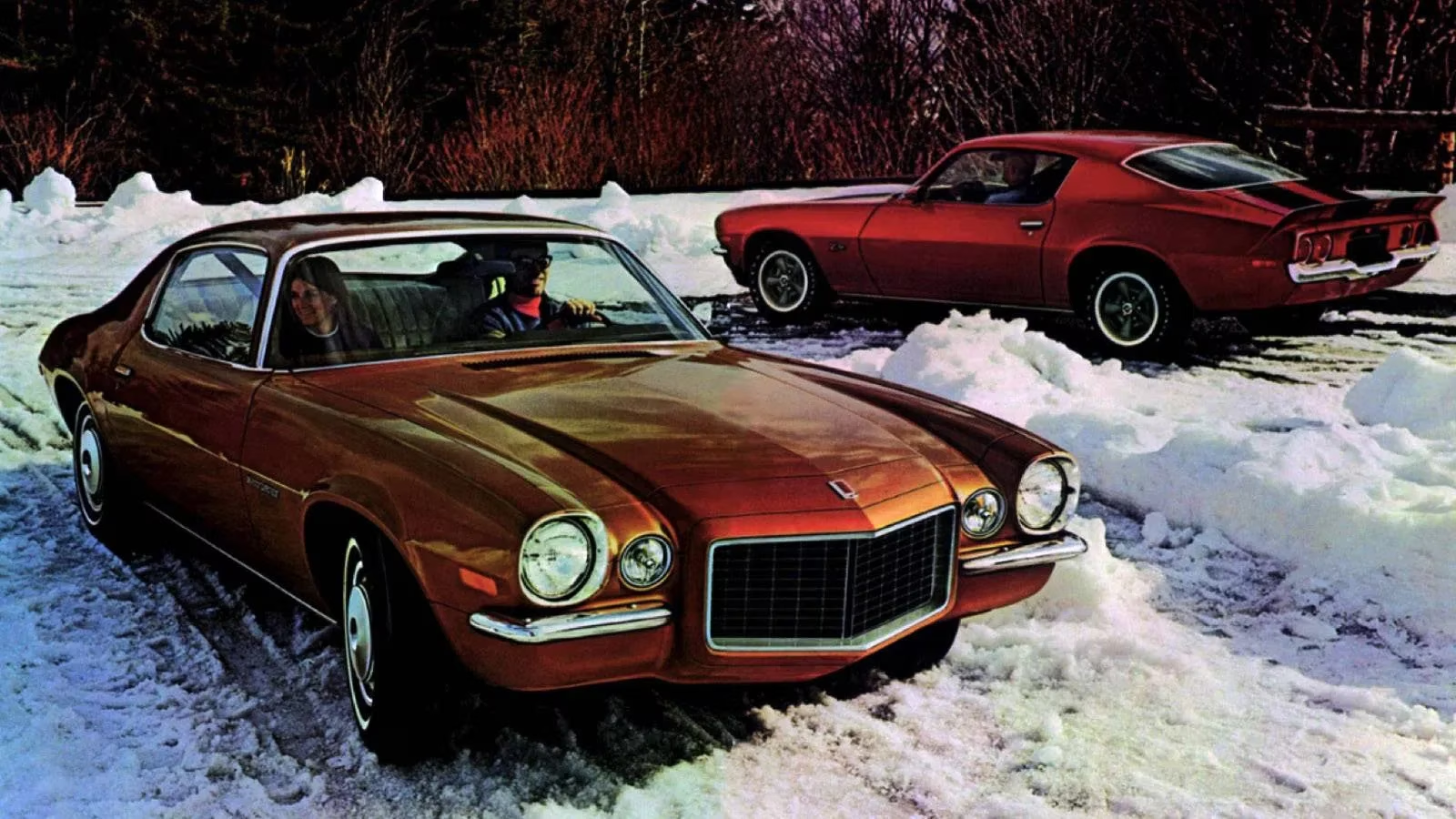
Let's be honest: the Camaro’s journey through the 1970s is one of the most dramatic story arcs in pony car history. It started with a masterpiece that Ferrari designers might have admired and ended the decade with vinyl landau roofs and engines that struggled to outrun a modern riding mower. As a pro gamer and gearhead, I’ve always seen these cars like patches in a video game — some updates are buffs, some are devastating nerfs. So grab your joystick or your Hurst shifter, because we’re diving deep into every second-gen Camaro model year, ranked from the absolute bottom to the sublime summit.
10th Place: 1976 Camaro — The Rock Bottom Debuff
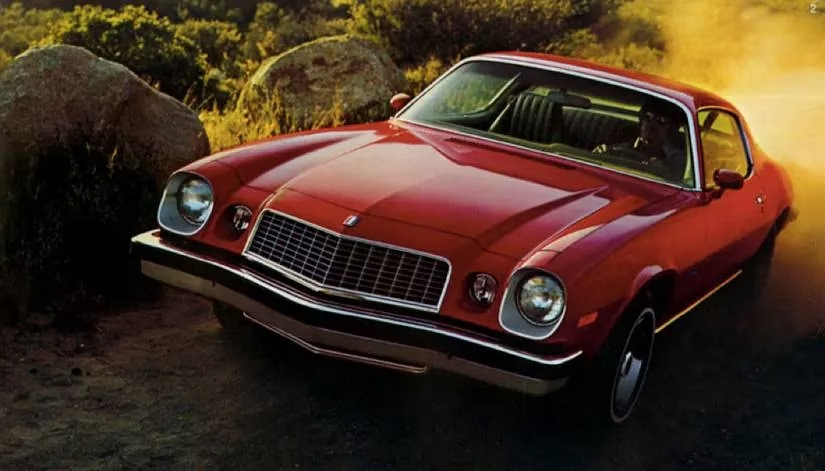
If the 1970s Camaro saga were a role-playing game, 1976 would be the level where the developers accidentally deleted all your character’s strength stats. The OPEC oil embargo and tightening emissions rules had already been hammering performance for a few years, but Chevy’s engineers decided the key to survival was to under-bore the legendary small-block V8 from 5.7 liters (350 cubic inches) down to a truly woeful 5.0-liter (305 ci) mill. This engine, standard on the up-level Type LT — which stood for Luxury Touring, though it delivered anything but — cranked out a meager 140 horsepower.
If you opted for the base Sport Coupe, you were stuck with the ancient 4.1-liter straight-six, a powerplant that debuted way back in the 1962 Chevy II and plodded along with just 105 ponies. Sure, you could still get the 350 V8, but even that felt strangled. The “Rally Sport” appearance group added some visual flair, but in a 3,600-pound package, the word sport was pure irony. Compared to its sibling Pontiac Firebird, the ’76 Camaro felt like Chevy had simply given up. This is the year that makes restoration enthusiasts wince and collectors yawn.
9th Place: 1975 Camaro — Driving More Slowly Now
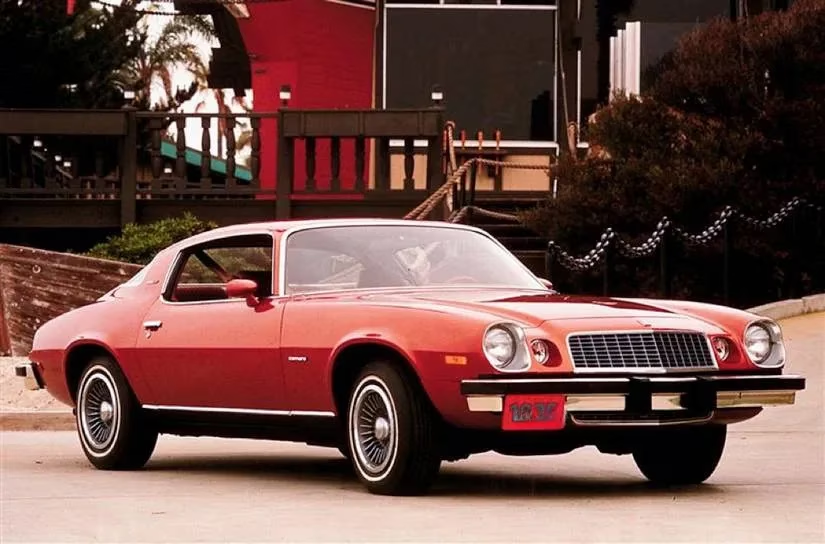
Open the brochure for the 1975 Camaro and the first line is a downer: “You’re driving more slowly now, and perhaps you’re driving less.” Talk about a marketing debuff. This was the first of two years where the legendary Z28 performance package vanished completely, a sign that Chevrolet was scrambling to position its pony car in a world of soaring gas prices and suffocating government regulations.
The brochure even tried to sell the Camaro as “a small car,” which is hilarious when you realize this machine is actually an inch longer than a 2019 Malibu. Buyers could dress up their Camaro as a base Sport Coupe or a Type LT, with power coming from either the asthmatic six-cylinder or the 350 V8. The only exterior change from 1974 was a new backlight that wrapped around to the sides of the roof, letting a smidge more daylight into the cabin. While it was a comfortable cruiser, the ’75 Camaro was more about surviving the energy crisis than turning tires into smoke.
8th Place: 1974 Camaro — Retainer Bumper and the End of an Era
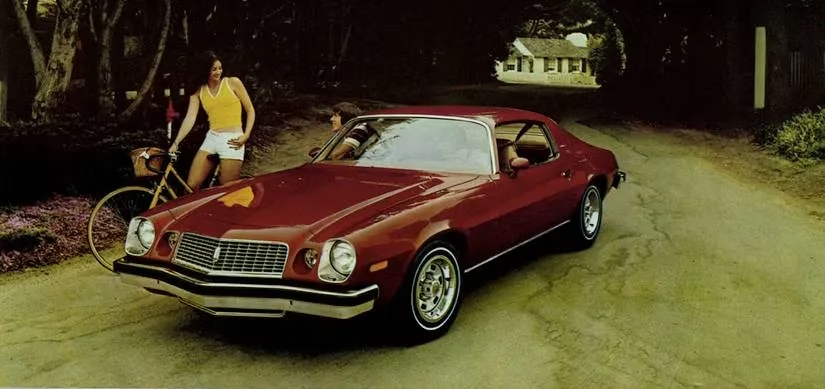
The federal government’s new low-impact collision standards kicked in for 1974, and the Camaro got an automotive equivalent of orthodontic headgear — a beefy chrome battering ram that replaced the sleek, open-mouth grille. It wasn’t pretty, but at least you could still order a Z28 this year before its two-year hiatus. That Z28 wore bold graphics and packed a 350 V8 derived from the Corvette’s L82 engine, making it the one bright spot.
Sadly, the Rally Sport package with its iconic split-bumper front fascia was axed because it couldn’t meet the new NHTSA guidelines. The 1974 Camaro marks the twilight of the muscle era, where style started to buckle under the weight of regulation. Still, that Corvette-derived heartbeat keeps it from sinking lower on this list.
7th Place: 1973 Camaro — Strike Out and a Farewell to the SS
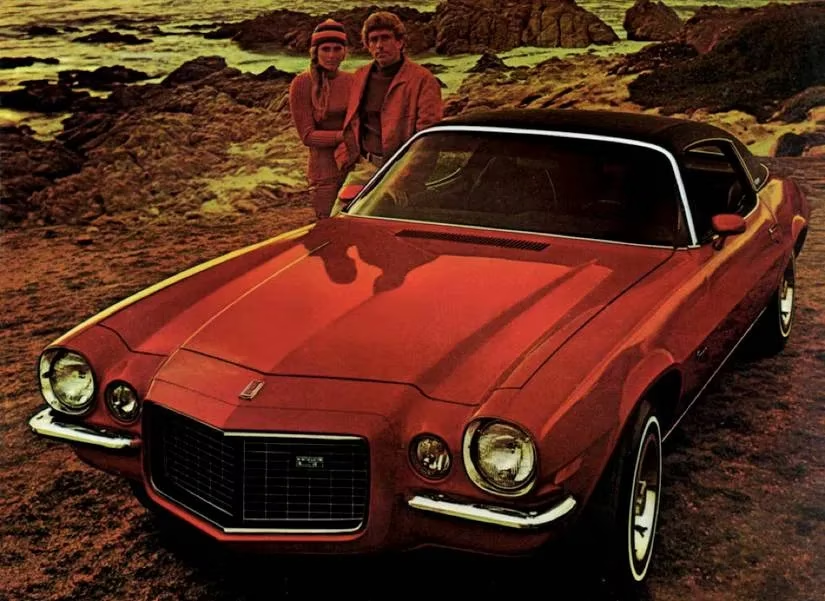
The 1973 model year began with a massive stumble — a six-month strike at the suburban Cleveland plant that built Camaros and Firebirds meant General Motors couldn’t do much of substance. So the exterior was a carry-over, retaining the larger “egg-crate” grille from 1972. In the showroom, the biggest change was the disappearance of the Super Sport (SS) model, replaced by the luxury-oriented Type LT.
This was also the last year for the 5.0-liter (307 ci) V8, a direct descendant of the engine that launched with the 1955 Chevrolet. And for the first time ever, you couldn’t get a two-speed Powerglide automatic; instead, a three-speed Turbo Hydra-Matic shifted the gears. The strike made ’73 Camaros relatively scarce, and while performance was clearly waning, the platform still had the bones of greatness.
6th Place: 1977 Camaro — The Z28 Returns from the Dead
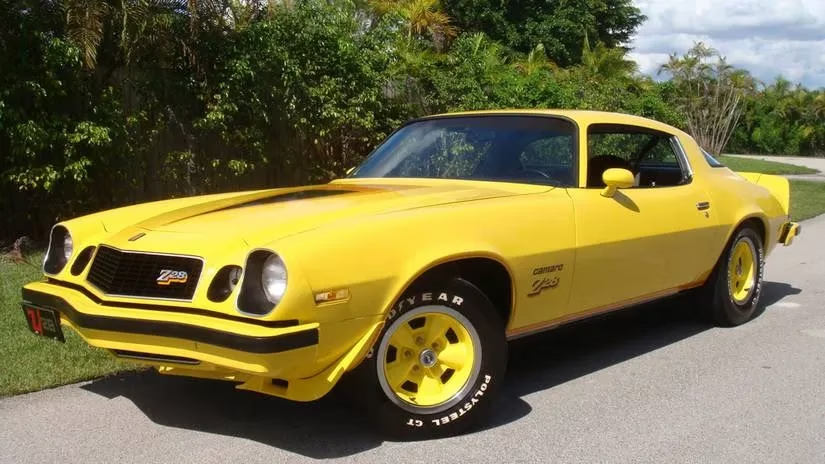
After two years without a serious performance model, Chevrolet watched Pontiac’s Firebird Trans Am fly off dealer lots and realized they’d miscalculated badly. At midyear, the Z28 package stormed back with a new graphics package, body-color bumpers, and a 5.7-liter V8 that was largely similar to other 350s but carried the mystic of the nameplate. It was an instant hit.
The rest of the Camaro line was a carry-over from 1976 — base and Type LT models with six-cylinder and V8 engines — but the revived Z28 gave enthusiasts hope. It wasn’t the fire-breathing beast of old, but it had a fighting spirit that reignited the Camaro legend. Plus, those stripes looked killer.
5th Place: 1978 Camaro — Urethane Makeover and T-Tops Finally Arrive
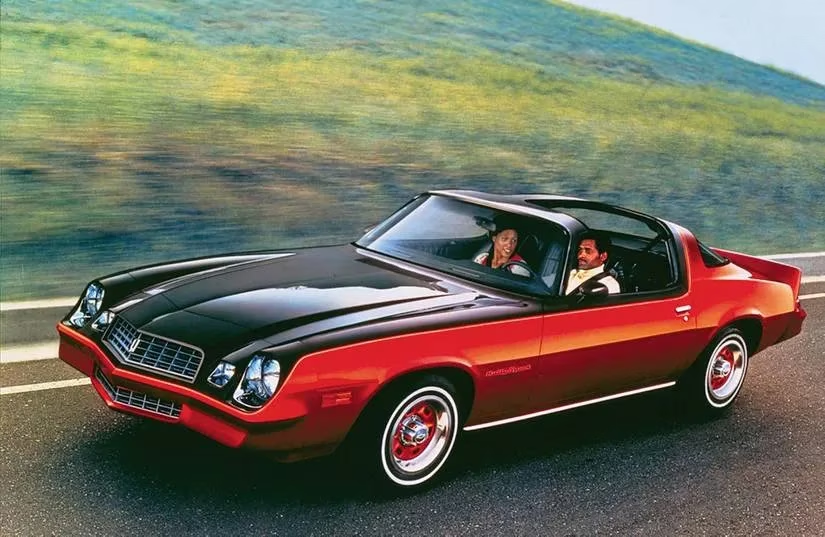
Chevrolet’s stylists finally caffeinated themselves in 1978 and found a way to make those five-mph bumpers attractive: cover them in urethane front and rear. Suddenly the Camaro looked cohesive again, with larger tri-color wraparound taillights and a rear license plate relocated to the bumper. The Z28, now a full-year model, took center stage in the brochure with fresh fender louvers and a nonfunctional hood scoop that oozed attitude.
Best of all, Camaro buyers could order factory T-tops for the first time. Pontiac had offered them two years earlier, so this felt like a long-overdue unlock. Whether you had a base Sport Coupe, Type LT, or Rally Sport, those removable glass panels turned every drive into a sunny experience. The engine choices remained dated, but the look was finally back on track.
4th Place: 1979 Camaro — Berlinetta Luxury and the Last of the Decade
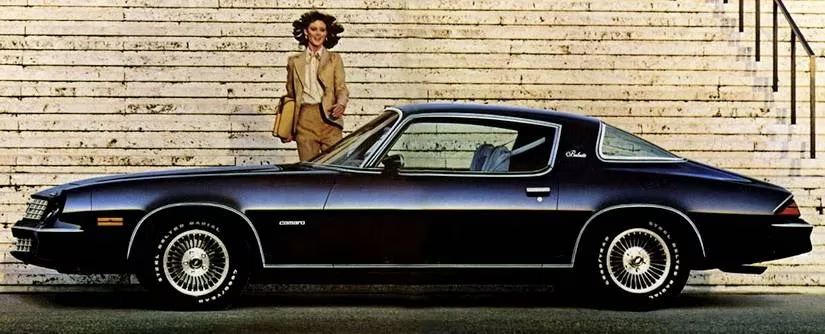
The decade closed out with the introduction of the Berlinetta, a luxury trim that replaced the Type LT and featured upscale upholstery, delicate pinstriping, and flashy chrome badges. On the opposite end, the Z28 started to seriously mimic its Trans Am sibling, wearing aggressive striping and front and rear fender spats. All Camaros got a redesigned dashboard with a revised center area that was less driver-focused, making way for air conditioning vents — a nod to the growing demand for comfort.
While performance was still shackled by emissions controls, the 1979 Camaro felt like a celebration of what the platform could be when style led the way. It’s the best of the late-decade models, blending flair, luxury, and a hint of muscle car DNA.
3rd Place: 1971 Camaro — Compression Drop but Still a Stunner
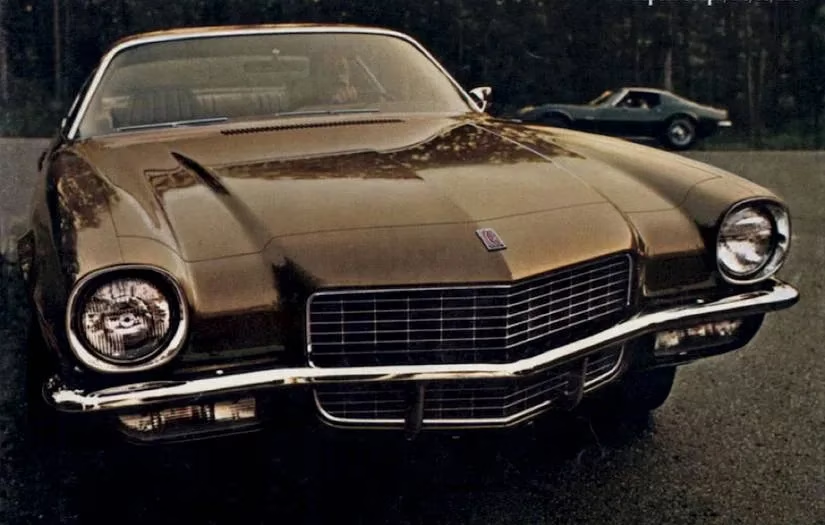
The first full model year of the second generation brought one major invisible change: General Motors lowered compression ratios across all V8 engines so they could burn low-lead and unleaded gasoline. That knocked the SS’s big-block “396” (actually a 402 ci) from 350 gross horsepower down to 300 (260 net). What buyers could see were high-back bucket seats replacing the low-backs with adjustable headrests, and the option to add a vinyl roof in one of five colors.
Despite the power dip, the 1971 Camaro kept all the seductive curves and long-hood proportions that made the 1970½ an icon. It’s the last of the early high-water marks before the slow slide began, making it a coveted find today, especially in Z28 or SS guise.
2nd Place: 1972 Camaro — Last Call for Big-Block Fury
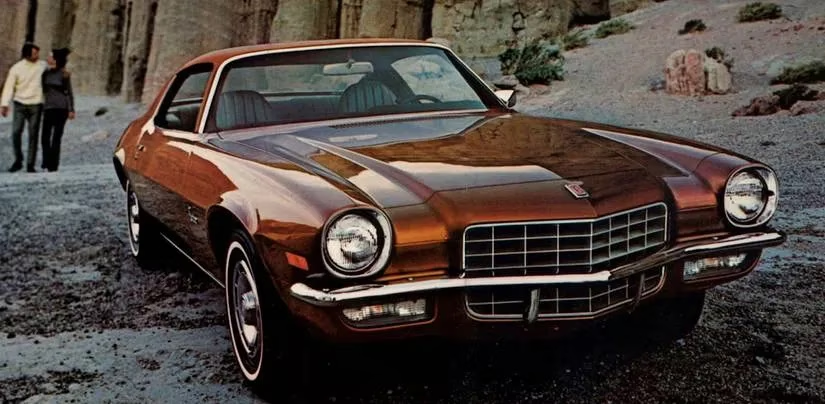
The 1972 Camaro is the ultimate unicorn of the decade. This was the very last year you could equip your pony car with the massive big-block “396” V8 (actually 402 cubic inches) in the SS package, churning out 240 net horsepower. The Rally Sport appearance option was still available, gifting the car those gorgeous split bumpers and a full-length grille opening that made it look like a custom hot rod.
But remember that six-month strike in 1972? Its onset meant Chevrolet lost thousands of potential units and had to scrap several hundred unfinished Camaros left on the assembly line because they didn’t meet new-for-1973 regulations. That makes surviving ’72s exceptionally rare and desirable. If you ever spot an SS 396 with the RS package, you’ve found a true boss-level reward.
1st Place: 1970½ Camaro — The Greatest Second-Gen of All
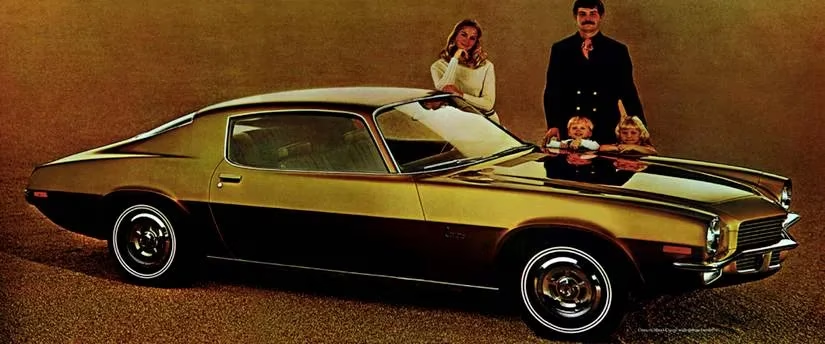
Finally, the champion. The 1970 Camaro didn’t hit showrooms until February of that year, which is why enthusiasts still call it the “1970½.” Regardless of semantics, it was the purest, most breathtaking distillation of the second-generation pony car. That long, predatory hood, graceful bumpers, and sensuous curves made it look like it was doing 100 mph while parked. And with the Rally Sport’s signature split bumpers, it could pass for a hand-built custom street rod straight from the assembly line.
Chevrolet marketed it as a Corvette’s little brother, and the SS and Z28 models backed that up with genuine Corvette-derived V8 engines. In a world of resto-mods and clones, finding an unmolested 1970½ is like looting a legendary item. It’s the only year that completely escaped the performance slide, and its values have only climbed. For my money — and every gearhead’s dream — this is the undisputed king of the 1970s Camaros.
From the 140-horsepower heartbreak of 1976 to the sculptural perfection of the 1970½, the second-generation Camaro’s journey is a time capsule of an entire automotive upheaval. And now in 2026, these cars are more than just metal and rubber; they’re rolling save points in the game of automotive history.
Leave a Comment
Comments