
Muscle vs. Precision: Hellcat and GT-R’s Photo Finish Leaves Everyone Guessing
It’s a humid afternoon at Mission Park in British Columbia, where the air is so thick you could almost bottle it and sell it as premium moisture. This little corner of Canadian drag racing paradise has seen its fair share of showdowns, but few get the heart pumping like a good old-fashioned brawl between American muscle and Japanese engineering. And when that brawl involves a Dodge Charger SRT Hellcat and a Nissan GT-R R35, well, you better believe the crowd’s muttering their bets before the lights even flicker.
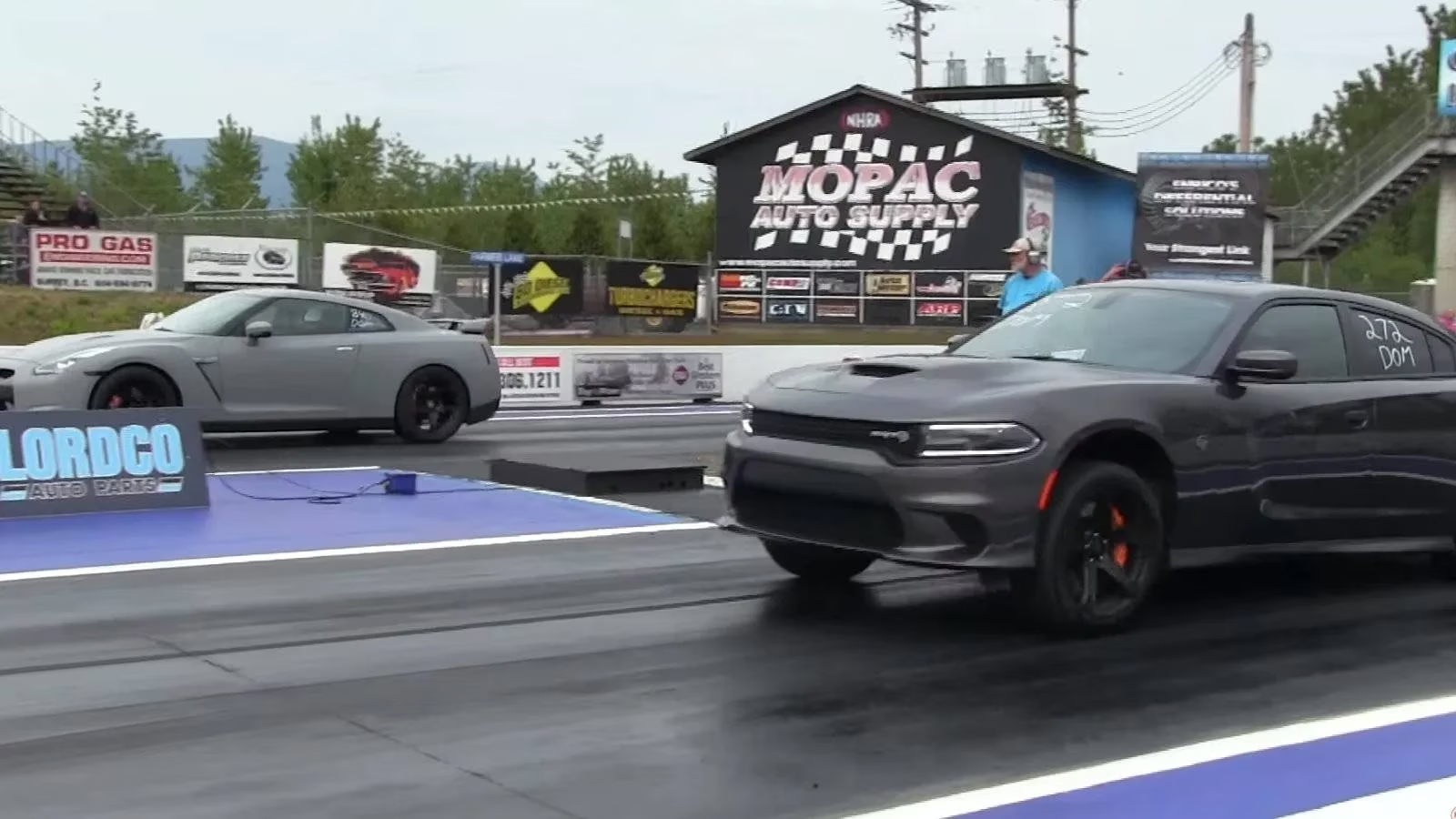
On the left lane sits the Hellcat—a supercharged HEMI beast with more horsepower than a small aircraft. It tips the scales at over 4,500 pounds, which is roughly the weight of a ranch house with a V8. Let’s be honest, the Hellcat is the kind of car that announces its presence with a roar that rattles fillings and sets off car alarms three blocks away. It’s rear-wheel drive, which makes every launch an exercise in throttle management and whispered prayers.
On the right lane lurks the GT-R, Godzilla itself. This particular R35 is likely a later model—post-2017, if the way it hooks up off the line is anything to go by. The R35 generation stuck around until 2025 with more facelifts than a Hollywood starlet, so pinning down the exact year is a favorite hobby for Nissan nerds. No matter the year, it packs a twin-turbo 3.8-liter V6 that churns out a deceptively modest-sounding 565 horsepower—until you remember it’s all-wheel drive and weighs under 4,000 pounds. The GT-R is the silent type; it doesn’t brag, it just launches like it’s been fired out of a railgun, leaving physics with a confused expression.
Now, the track conditions at Mission Park are… let’s call them “character-building.” The humidity hangs in the air like a wet blanket, which does wonders for the sinuses but plays tricks on forced induction engines. You see, turbos love cool, dense air, while superchargers just want to gulp down as much atmosphere as possible. Neither car is getting its ideal meal today, but both are too proud to complain.
These two are a study in contrasts—a dinosaur on the left, a cyborg on the right. The Hellcat is the brash American brawler, all swagger and supercharger whine, basically a four-door rocket that skipped leg day. The GT-R is the silent-but-deadly ninja, armed with twin turbos and a launch control system that borders on digital sorcery.
The Christmas tree lights dance down, and off they go. The GT-R, as expected, gets the jump. Those launch control systems are basically cheating—in the most delightful way possible. It squirts ahead by half a car length before the Hellcat even realizes the race has started. But then the big HEMI finds its legs (all eight of them, if pistons count) and starts reeling in the Nissan like a bear chasing a very fast squirrel.
Mid-track, it’s anyone’s race. The Hellcat’s supercharger whine battles the GT-R’s turbo whistle for auditory supremacy. Spectators lean forward, squinting into the haze. For a glorious few seconds, the cars are dead even, a perfect metal yin-yang hurtling toward the finish line at triple-digit speeds.
...
And then—disaster. Or comedy, depending on your perspective. The timing board flashes the Hellcat’s numbers: 11.25 seconds at 124.08 mph. Impressive, sure. But for the GT-R? Nothing. Nada. The screen goes blank like it just saw a ghost. Technical gremlins, they’d say later. Probably the same humidity that makes everyone’s hair frizz decided to munch on some wiring. The scoreboard took a coffee break at the worst possible moment. Go figure.
So who won? Your guess is as good as anyone’s. Eyeball estimates say it was a photo finish—maybe the GT-R by a whisker, maybe the Hellcat by a piston’s width. Without the numbers, it’s pure barstool debate fuel.
That’s the beauty of drag racing, though. Sometimes you get a clear winner, sometimes you get a story that’ll be told and retold, each version a little more exaggerated. The Hellcat driver will remember the day his boat almost sank Godzilla. The GT-R pilot will insist the computer had him ahead. And the fans? They’ll just be glad they witnessed two very different philosophies of speed hurtling down a strip in harmony—until the tech ruined the punchline.
One thing’s for certain: when they return for a rematch (and they will, because pride is a powerful motivator), maybe someone will bring a stopwatch as backup. Or a towel for the timing equipment. Until then, the misty drag strip of British Columbia holds onto its little secret, and we’re all left wondering which legendary beast really crossed that line first.
Leave a Comment
Comments