
Modern Infotainment Systems: Surprising Driving Hazard Exceeding Alcohol Impairment
A groundbreaking 2025 study reveals that the infotainment systems found in nearly all modern vehicles, particularly Apple CarPlay and Android Auto, create significantly more dangerous driving conditions than previously understood. Conducted by IAM Roadsmart, the UK's largest independent road-safety charity, the research demonstrates that these ubiquitous technologies impair driver reaction times more severely than driving under the influence of alcohol or cannabis at legal limits. This startling discovery challenges the automotive industry's long-standing claims about the safety benefits of integrated infotainment platforms.
🔬 Methodology & Testing Parameters
IAM Roadsmart employed rigorous scientific protocols to measure how infotainment usage affects critical driving metrics:
-
Test Scenarios: Drivers operated vehicles under three distinct conditions:
-
No infotainment system engagement
-
Voice-activated commands only
-
Traditional touchscreen/button controls
-
Measured Metrics:
-
Reaction time to sudden hazards
-
Stopping distances at highway speeds
-
Lane deviation consistency
-
Visual attention duration off-road
-
Control Comparisons: Performance benchmarks were established against:
-
Drivers at UK alcohol limit (0.08% BAC)
-
Cannabis-impaired drivers
-
Texting while driving
⚠️ Alarming Research Findings
The comprehensive data reveals disturbing realities about infotainment safety:
-
Reaction Time Deterioration 💥
-
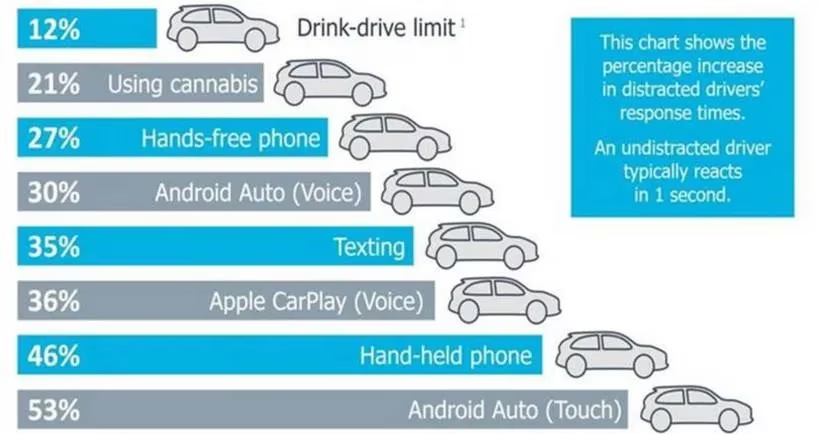
Touchscreen interaction caused reaction delays 37% longer than texting
-
Voice commands still resulted in 30% slower reactions than baseline
-
Visual Distraction Scale 👀
-
Drivers took eyes off road for up to 16 seconds continuously
-
At 70mph, this equals over 1,600 feet of 'blind' driving
-
Stopping Distance Impact 🛑
| Condition | Increased Stopping Distance |
|------------------|-----------------------------|
| Voice Commands | 3 car lengths |
| Touchscreen Use | 4-5 car lengths |
| Legal Alcohol | 1-2 car lengths |
-
Accident Correlation 📊
-
Driver distraction contributes to 33% of European road accidents
-
Infotainment systems represent the fastest-growing distraction category
🌍 Geographical Considerations
While conducted in the UK, these findings have global implications:
-
US Relevance: Preliminary 2024 NHTSA data shows similar distraction patterns
-
Regulatory Gap: Most safety regulations haven't addressed infotainment cognitive load
-
Manufacturer Response: Several automakers now implement "driving mode" restrictions
🎙️ The Voice-Activation Paradox
Although voice commands proved safer than touchscreens, they still introduced significant risk:
-
Cognitive Load: Complex voice menus required mental effort equivalent to solving math problems
-
Error Correction: Failed commands often led drivers to revert to manual controls
-
False Security: Drivers using voice systems showed overconfidence in their safety

🛡️ Safety Recommendations
Based on the 2025 findings, safety experts advise:
✅ Pre-Drive Setup: Program destinations and playlists before moving
✅ Voice Command Limits: Restrict to essential functions (navigation alerts)
✅ Automaker Accountability: Demand simpler interfaces with:
-
Tactile feedback
-
Glance-time monitoring
-
Speed-sensitive feature disabling
❌ Avoid Completely: Social media integration and video streaming
🔮 Future Research Directions
Ongoing studies focus on:
-
HUD (Head-Up Display) integration effectiveness
-
AI-powered distraction detection systems
-
Standardized industry safety protocols
-
Age-specific vulnerability analysis
This paradigm-shifting research fundamentally alters our understanding of in-car technology safety. As vehicles become increasingly connected, these findings underscore the urgent need for smarter interface design and evidence-based regulations to address what has become—quite unexpectedly—the most dangerous form of distracted driving on modern roads.
Leave a Comment
Comments