
GM's Big Infotainment Shift: Ditching Apple CarPlay & Android Auto in Future EVs
A major shift is brewing in the world of in-car tech, and it's coming from an American automotive titan. General Motors (GM), the powerhouse behind brands like Cadillac, Buick, and Chevrolet, is steering its future electric vehicles (EVs) away from the familiar smartphone mirroring systems. Starting with its upcoming EVs, GM plans to phase out support for Apple CarPlay and Android Auto, opting instead for a deeply integrated, built-in infotainment system developed in partnership with Google. This marks a pivotal moment for drivers who have grown accustomed to the seamless connectivity these apps provide. While GM states that this move will enable a more cohesive and advanced driving experience, industry watchers are reading between the lines, seeing a strategic play for data, control, and a new revenue frontier.
📊 The Core Strategy: Integration Over Mirroring
GM's official reasoning centers on creating a more unified and sophisticated user experience. The company argues that by moving to a native system, the vehicle's infotainment can be better integrated with other critical systems, such as the Super Cruise driver-assistance technology. "We have a lot of new driver assistance features coming that are more tightly coupled with navigation," explained a GM spokesperson. The belief is that a built-in system allows the car itself to be a more intelligent hub. "The vehicle can know more than the phone does," the spokesperson added, suggesting that deep vehicle data integration is key for future EV features, from predictive energy management to context-aware assistance.
💰 The Unspoken Driver: Data and Subscription Revenue
Beneath the surface of improved integration lies a powerful economic engine. Data collection is the lifeblood of the modern digital economy, and automakers are keen to tap into this stream. When drivers use Apple CarPlay or Android Auto, valuable data on navigation habits, media consumption, and even frequent destinations flows primarily to Apple and Google, leaving carmakers in the dark. By requiring the use of its proprietary system, GM can directly collect and analyze this rich behavioral data from its customers.
This data strategy is intrinsically linked to a bold financial ambition. GM has openly discussed transforming its vehicles into platforms for digital subscription services, targeting a staggering $20 to $25 billion in annual revenue from this stream by 2030. "We do believe there are subscription revenue opportunities for us," the company has stated. The initial offering will include eight years of complimentary access to services like Google Maps, Google Assistant, and planned integrations with Spotify and Audible.
🚗 The Pioneer: The 2024 Chevrolet Blazer EV
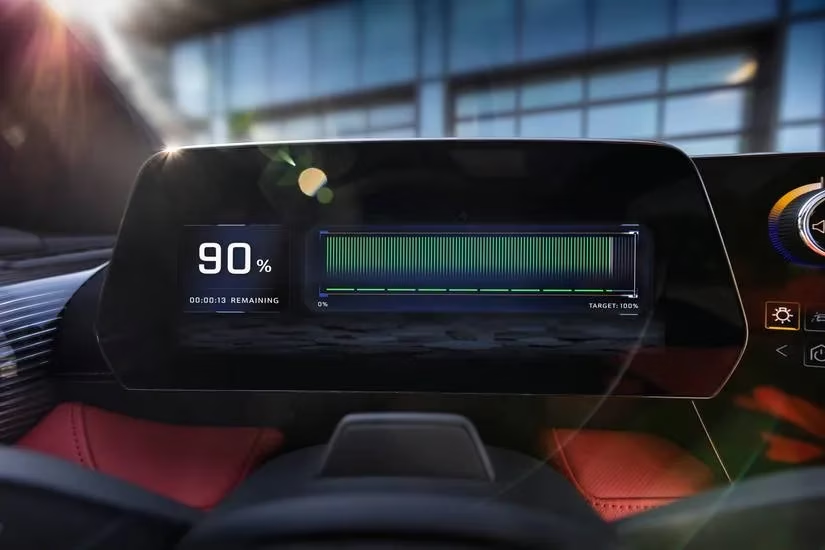
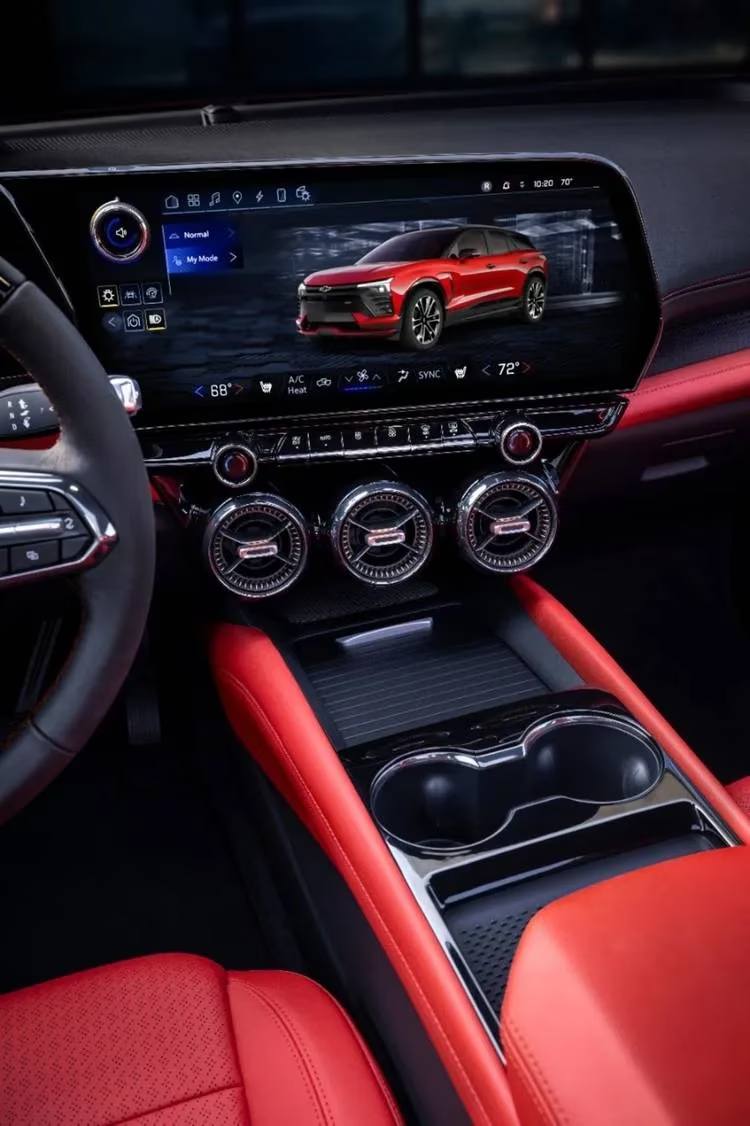
The first vehicle to showcase this new direction will be the highly anticipated 2024 Chevrolet Blazer EV. This model will serve as the flagship for GM's reimagined digital cockpit, featuring the new Google-based infotainment system as its centerpiece. It represents a unified engineering focus, allowing GM's developers to concentrate resources on a single, deep ecosystem rather than supporting multiple mirroring protocols. The goal is a smoother, faster, and more feature-rich interface that feels native to the vehicle.
⚖️ The Trade-Off: Convenience vs. Control
For consumers, this shift presents a clear trade-off. On one hand, they may gain a more integrated experience where the car's systems work in greater harmony. On the other, they lose the effortless, familiar, and free ecosystem they carry in their pockets. Critics point out that brands like Volvo and Polestar already offer excellent, integrated experiences that still support smartphone projection, proving the two concepts aren't mutually exclusive.
GM's move could be a gamble on customer acceptance. To mitigate pushback, the promised eight-year complimentary service period is a crucial sweetener. However, it raises questions about long-term costs and whether drivers will be asked to pay subscriptions for features they currently get for free through their phones.
🔮 The Road Ahead: A New Digital Landscape
GM's decision is a bellwether for the industry. It signals a future where the car's dashboard is not just a display but a proprietary gateway—a walled garden of services, data, and revenue. This philosophy prioritizes the vehicle as a standalone smart device over its role as an accessory to a smartphone.
Key Implications for Drivers:
-
👍 Potential Pros: Deeper vehicle integration, potential for unique EV-specific features, a unified interface.
-
👎 Potential Cons: Loss of personal smartphone ecosystem familiarity, risk of future subscription fees, potential for less frequent software updates compared to phone-centric apps.
-
❓ The Big Question: Will the enhanced native experience be compelling enough to make drivers forget the simplicity of CarPlay and Android Auto?
As the 2024 Chevrolet Blazer EV hits the roads, it will be the first real-world test of this strategy. Its success or failure will likely determine whether other automakers follow GM down this path or stick with the consumer-proven mirroring approach. One thing is certain: the battle for the digital dashboard is just heating up.
Leave a Comment
Comments