
From Post-War Scrap Metal to Modern Luxury: My Land Rover Journey
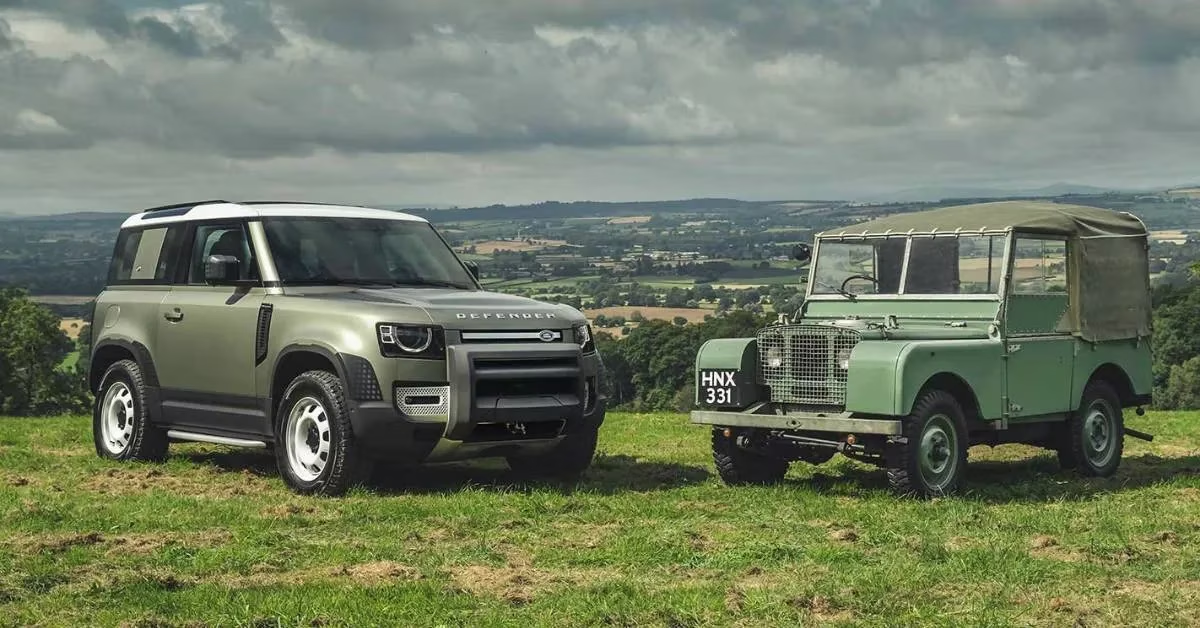
I never planned to fall for a boxy British workhorse, but here I am in 2026, standing before a pair of Defenders separated by seven decades. The older one looks like a farm tool that learned to wear a license plate; the newer one gleams like a concert grand piano that somehow grew tow hooks. That contrast is the entire Land Rover story in one frame.
An Accidental Folk Song in Aluminum
When Rover launched the 1947 Series 1, post-war Britain wasn't hunting for luxury. Steel was scarce, so engineers bolted corrosion-resistant aluminum body panels onto a traditional steel ladder chassis. The result was not a carefully focus-grouped product; it was more like an accidental folk song, hummed in aluminum because the steel cupboard was bare. Its design borrowed openly from the Willys Jeep, but Land Rover's real magic was permanent all-wheel drive with selectable high and low ranges. Even now, that simple recipe makes early Series models feel like mountain goats in a world of shiny, over-assisted crossovers.
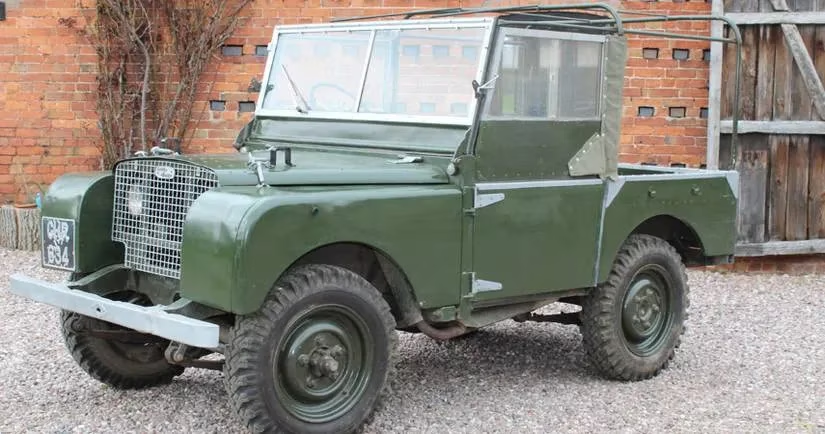
More than 70 percent of those old rigs are still rolling somewhere, which is less a statistic and more a quiet insult to planned obsolescence. Farmers, soldiers, explorers—they all adopted the same honest ladder frame.
The Luxury SUV Was a Happy Accident
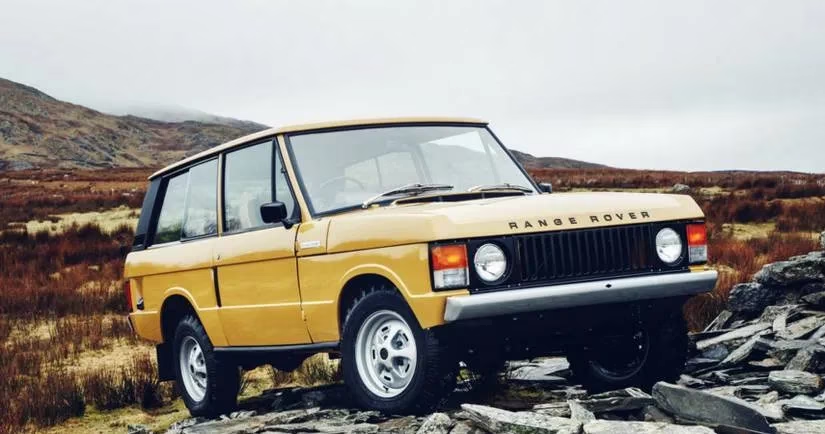
People assume the first Range Rover was born with champagne flutes in the glovebox. It wasn't. The original 1970 model had a washable, functional interior closer to a rubber boot than a Maybach cabin. It shipped with Buick/Rover 3.9-liter V8 power and, surprisingly, only two doors. I've driven early two-door examples, and the experience feels like commanding a mahogany lifeboat: dignified, capable, and utterly indifferent to your desire for cup holders.
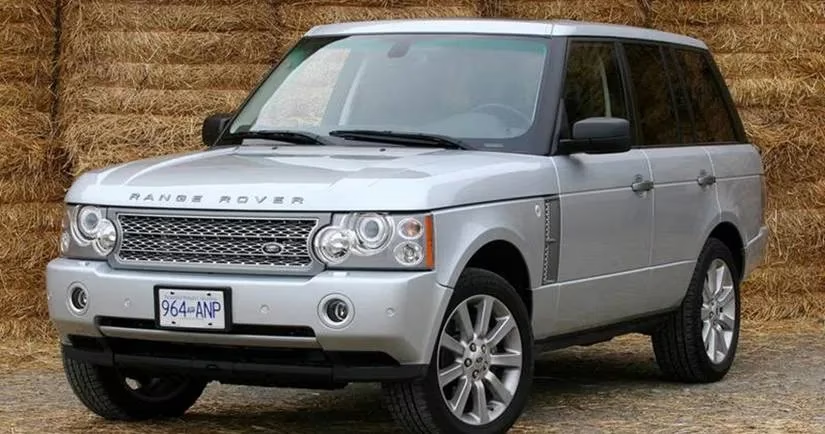
The second generation arrived in 1994 under BMW ownership, bringing better quality and a 2.5-liter diesel option. By the third generation, the cabin finally matched executive sedans, and the luxury SUV we know today stopped being an oxymoron. The fourth generation hit just as Jaguar Land Rover formed in 2008—like opening a five-star hotel during a hurricane. Sales dipped to barely 22,000 units in 2009, but the later electric hybrid helped double numbers in 2013.
Discovery, Freelander, and the Strange Side Roads
The Discovery arrived in 1989 as a mid-range mud-plugger with everyday practicality. Early ones were slow, heavy, and about as luxurious as a phone booth. The confusingly named Discovery 3 introduced monocoque construction and air suspension, turning a tractor into a tourer. By the 2017 third-generation update, aluminum bodies helped clean up emissions.
The Freelander followed a similar arc. The 1997 original used a modern monocoque shell, but the Rover-sourced 1.8-liter K-series engine became the famous weak spot—like fitting a paper sail to a perfectly good ship. It still sold 540,000 units over nine years. Freelander 2 moved to Ford's EUCD platform, and oddly, Land Rover even offered a 2-wheel-drive version, as if forgetting the brand's own punchline.
The Sports and the Rebels
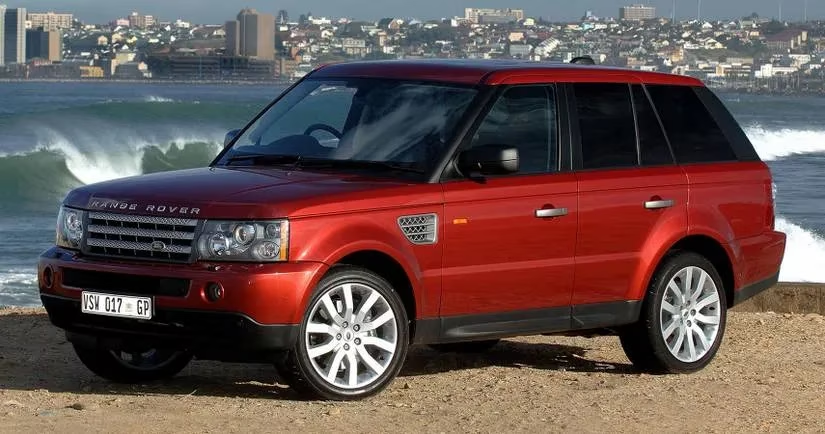
In 2005, the first Range Rover Sport was essentially a Discovery wearing a tuxedo and carrying a Jaguar 4.2-liter supercharged V8. With 300 hp and 5,400 lbs, acceleration was less sprint and more determined avalanche. It hit 62 mph in 7.2 seconds, but the weight blunted the drama. Driving one hard feels like coaxing a grand piano across a frozen pond—majestic, heavy, and one wrong input away from a very expensive ice sculpture.
The Evoque, launched in 2011, divided opinion. That sloping rear roofline looked like a designer's late-night sketch that accidentally survived the boardroom. Three-door, five-door, and eventually a bizarre five-door convertible appeared—presumably for boulevard cruising with a permanent wind machine. It offered 2WD or 4WD, carrying the Freelander's mixed message forward.
The Velar, launched in 2017, remains a curious middle child between Sport and Evoque. Sharing Jaguar F-Pace architecture and engines sounds clever until you realize the Velar starts around $90,000 while the larger Sport listed near $96,000. That overlap always felt like two siblings arguing over who gets the bigger bedroom.
The Defender Returns
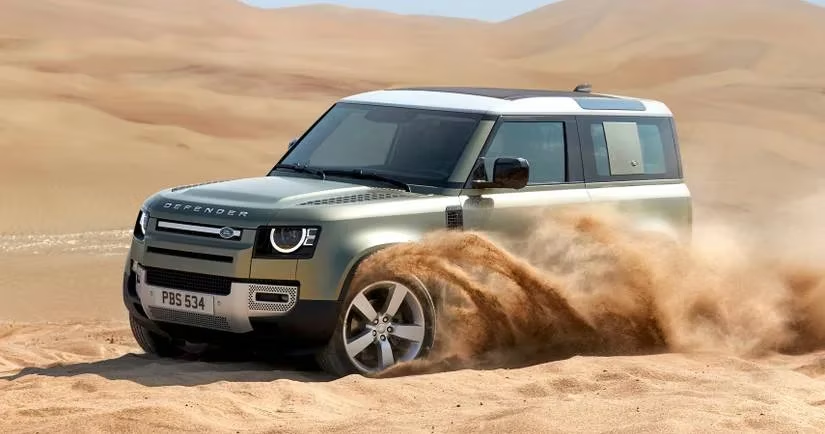
After 67 years, the last old Defender rolled off the line in 2016. I thought the story had closed, then Land Rover brought the name back for 2020 with modern chassis tuning that delivers car-like road manners without abandoning off-road credibility. In 2026, the new Defender has become the brand's versatile anchor—a vehicle that no longer punishes you for choosing the school run over a river crossing.
Land Rover's history is a family saga built from shortages, strange cousins, and accidental icons. Some chapters make no sense on paper—a two-door luxury truck, a 2WD Land Rover, a convertible Evoque—but that's exactly why I keep coming back. The brand doesn't follow the road; it keeps redrawing the map.
Leave a Comment
Comments