
From Cost-Cutter to Crown Jewel: The Unexpected Rise of the Luxury SUV
In 2026, the luxury SUV is the automotive equivalent of a private jet on wheels: huge, quiet, dripping with leather, screens, and enough computing power to make a 1990s supercomputer blush. Yet the first luxury SUVs were not born from a desire to show off. They were born from a very practical, very unglamorous urge: to cut corners and costs. The machine that would become the ultimate symbol of having it all started life as a compromise—a vehicle for people who could not afford to buy a truck, a wagon, and a luxury car all at once.
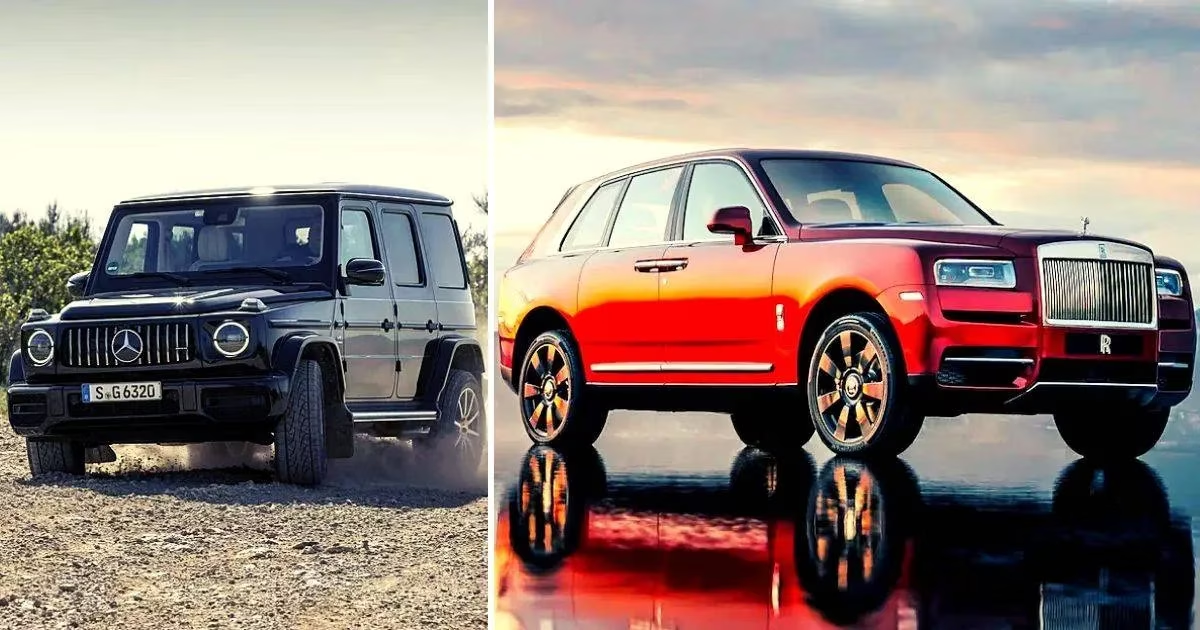
Historians of the automobile will tell you that the golden age of car design ran from the end of World War II to roughly the late 1970s. America, flush with industrial might, built cars that were long, low, wide, and unapologetically excessive. Gasoline was cheaper than bottled water, chrome was everywhere, and tailfins stretched toward the heavens like chrome-plated shark fins. A car was not a car unless it was BIG. For rougher work, there were trucks, vans, and pickups. For family duty, there was the station wagon—but even the wagon stayed close to its low-slung, road-hugging cousins.
If a young designer in the 1950s or 1960s had walked into a boardroom and pitched a single vehicle that combined station wagon space, Jeep-like four-wheel drive, sports car acceleration, and Cadillac luxury, the room would have erupted in laughter. 'Who is going to buy a Frankenstein car like that?' the executives would have barked. 'We would only make one model, and nobody would want it!' They might have added, 'What else are you going to put in this thing? A computer?' Well, about that...
The 1973 oil shock changed everything. Suddenly, gasoline was no longer a throwaway commodity. Families that had once kept half a dozen cars in the driveway had to think twice. The family car now had to be a jack-of-all-trades. A station wagon could cut the mustard on asphalt, but it was out of its depth on a farm, a building site, a gravel road, or the muddy track up to a cabin. The market demanded something taller, tougher, and more capable. So automakers built leggier vehicles, added four-wheel drive as an option, and waited to see what would happen. What happened was that people loved them. Even buyers who never needed 4WD discovered they wanted it anyway. The SUV had arrived.
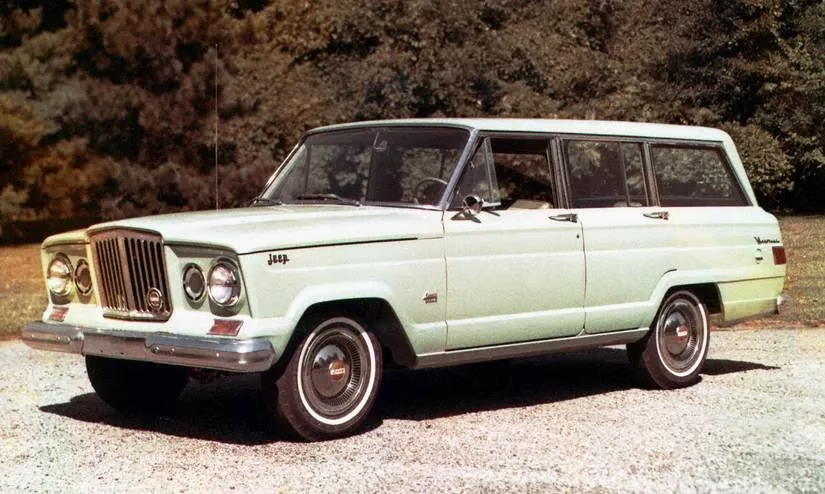
The 1963 Jeep Wagoneer is often called the grandfather of the luxury SUV. It was not a Cadillac, but it offered something radical: four-wheel drive, a comfortable interior, automatic transmission, and enough style to be driven to church on Sunday and the timber yard on Monday. It was a workhorse in a Sunday suit. Then came the Range Rover in 1970, a vehicle that started life as a utilitarian British farm tool but quickly became a favorite of the wealthy and well-connected. Before long, it was seen outside country estates, ski lodges, and city hotels. The message was clear: utility could be posh.
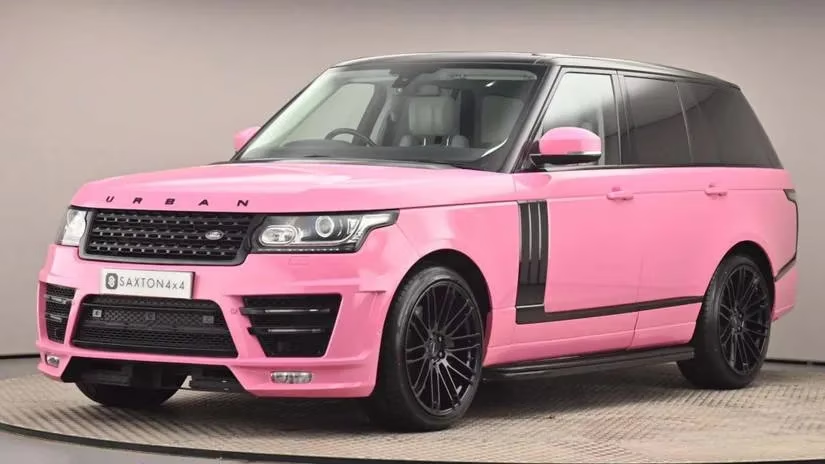
Through the 1980s and 1990s, the SUV went from niche to normal. Jeep Grand Cherokee, Ford Explorer, Toyota Land Cruiser, and Land Rover Discovery made the high-riding family wagon a staple of suburban driveways. Then the luxury brands piled in. Mercedes-Benz built the M-Class, BMW launched the X5, and Porsche shocked purists with the Cayenne. The SUV was no longer just practical. It was fast, stylish, and increasingly expensive. By the 2000s, the Cadillac Escalade, Lincoln Navigator, and Range Rover had become cultural shorthand for success. The G-Wagon, originally a military machine, became a celebrity accessory. The luxury SUV had become the whole nine yards.
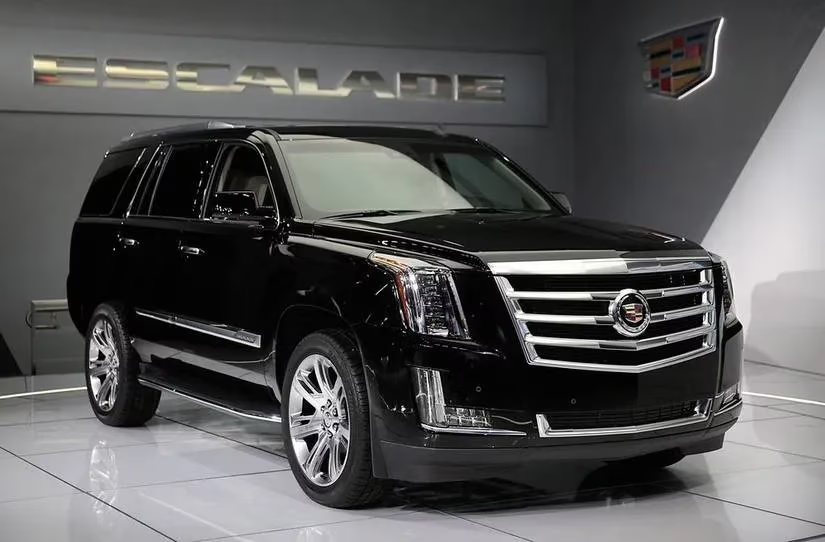
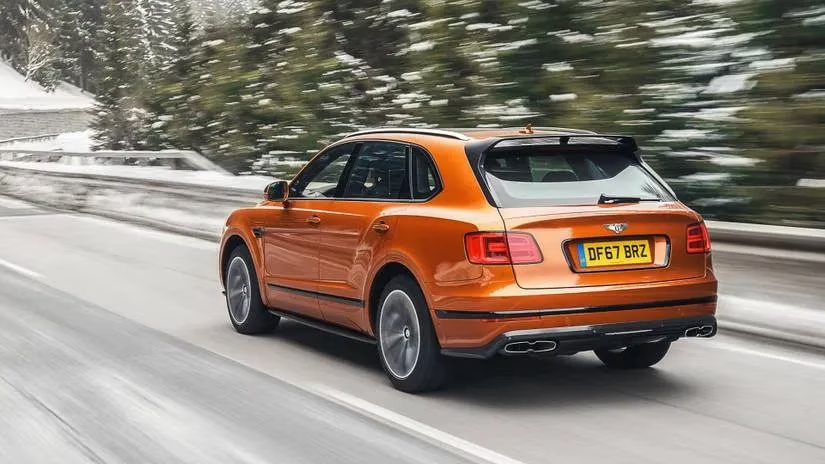
By 2026, the segment has gone electric, and the stakes are higher than ever. The Cadillac Escalade IQ, Range Rover Electric, Mercedes-Maybach EQS SUV, Lotus Eletre, and a growing fleet of plug-in hybrids like the Bentley Bentayga Hybrid and Lamborghini Urus SE show where the money is going. Even Rolls-Royce, Bentley, and Ferrari have joined the party, proving that the luxury SUV is no longer a contradiction in terms. It is the main event. In 2026, a luxury SUV can be a 1,000-horsepower electric rocket, a silent sanctuary with massaging seats, or a plug-in hybrid that can tow a yacht and still waft to dinner. It is the master of all trades.
| Era | Icon | What it proved |
|---|---|---|
| 1960s | Jeep Wagoneer | 4WD could be civilised |
| 1970s | Range Rover | Utility could be luxurious |
| 1990s | Mercedes ML, BMW X5 | Luxury brands could sell SUVs |
| 2000s | Cadillac Escalade, Porsche Cayenne | SUVs could be status symbols and sports cars |
| 2020s–2026 | Escalade IQ, Range Rover Electric, Bentayga Hybrid | The future is electric, opulent, and still high-riding |
The luxury SUV is a strange beast. It began as a cost-cutting compromise, a way to avoid buying three different vehicles. It became a jack-of-all-trades, then a master of all. It was laughed out of the boardroom, then took over the driveway. In 2026, it is the default choice for anyone who wants it all: speed, space, comfort, capability, and a commanding view of the road. The joke, it turns out, was on the executives who laughed. The Frankenstein car did not just survive. It became the crown jewel of the automotive world. 🚙✨
Leave a Comment
Comments