
Cars That Should Have Left Well Enough Alone: A Look at Questionable Modifications
You know, as I look back on the car scene over the years, I can't help but feel a mix of amusement and secondhand embarrassment. We all go through that phase, don't we? That powerful urge to make our cars an extension of ourselves, to scream "I am different!" from the rooftops—or, more accurately, from the tarmac. The freedom to personalize is a beautiful thing, a cornerstone of car culture. But, and it's a big but, freedom also means I'm free to look at some choices and think, 'My friend, what were you thinking?' It's like watching someone put a tuxedo on a golden retriever; the intent is formal, but the execution is just fundamentally confused. The desire to stand out can sometimes eclipse that little voice inside that whispers about balance, proportion, and, let's be honest, good taste. Today, I want to walk you through a gallery of automotive decisions where flashy wheels and ill-advised spoilers took precedence over the car's inherent character. Consider this a friendly intervention from a fellow enthusiast.
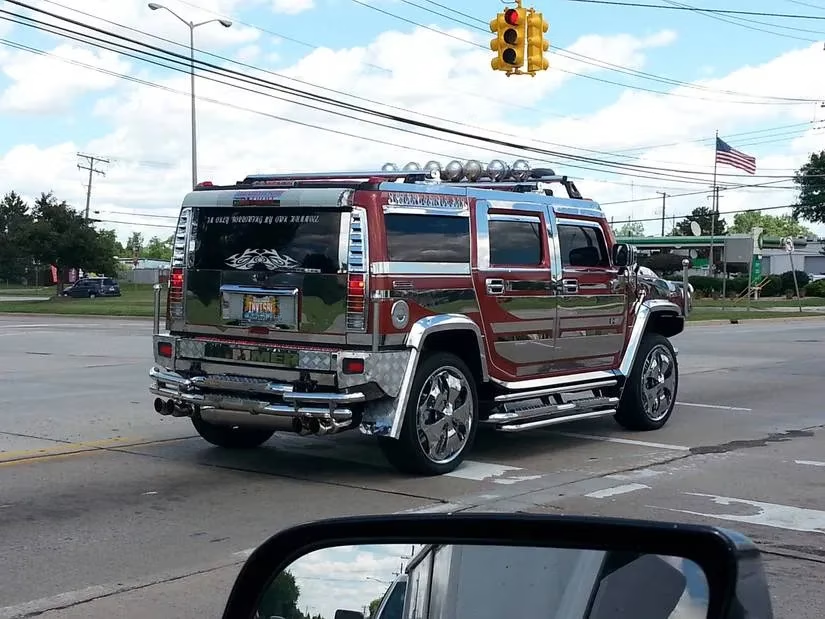
Let's start with a classic misstep. I came across this image, and it feels like a vehicle trapped in a time capsule, specifically the early 2000s. Chrome has its place—it can add a touch of class. But here? It's been applied with the subtlety of a glitter bomb in a library. From bumper to bumper, it's a reflective onslaught. And then, the pièce de résistance: those chrome spinner wheels. On this car, they don't look premium; they look like the car is nervously twirling its keys. The owner, drowning in chrome, could have left the stock wheels on and the car would have been perfectly fine, perhaps even better. This is a case where more is decidedly less.
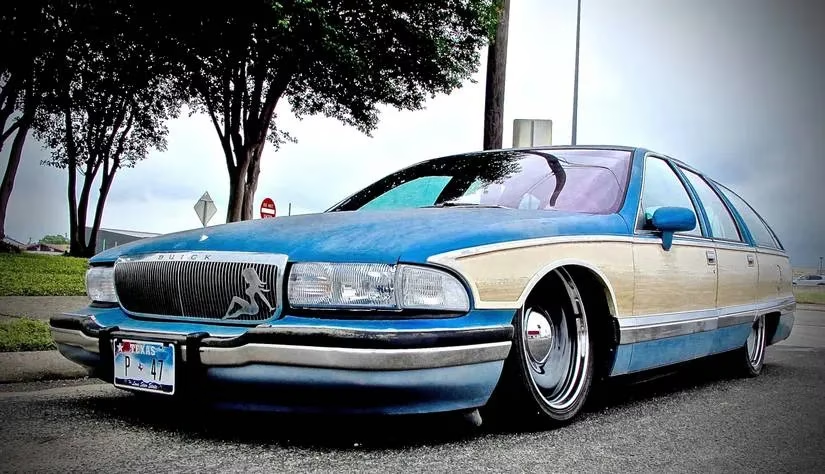
This one hurts my soul a little. The old Buick Roadmaster wagon is a legend—a proper American sleeper with a Corvette-derived V8 heart. It's the kind of car that whispers about power while looking like a comfortable family hauler. Or, it was. What we have here is a tragedy of lowered suspension and those same overly flashy chrome wheels. It's been 'stanced,' a modification that often sacrifices usability for a specific look. This is like putting ballet slippers on a linebacker and asking him to run a drill. The potential for a cool, powerful cruiser has been undermined by a need to fit a trend it was never meant for. The sheer capability of the car is visually neutered by those shiny rollers.
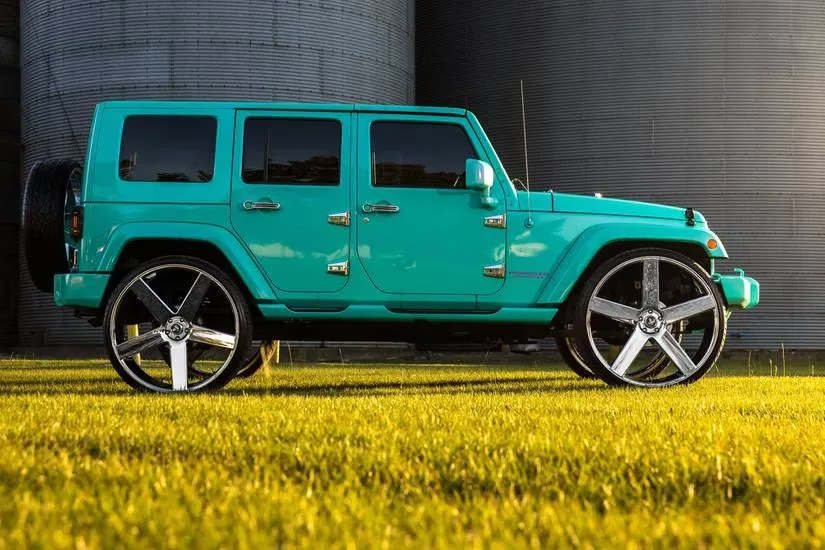
Ah, the Jeep Wrangler. An icon of off-road capability, born to conquer trails. Then, someone had the idea to slap on the biggest, flashiest wheels possible. The Wrangler Unlimited here, with its extra doors and carefully engineered approach angles, has been transformed. Those massive wheels with low-profile tires are about as useful off-road as a snorkel in a desert. They turn a go-anywhere adventurer into a pavement princess, limiting its terrain to smoothly paved streets and driveways. It's a modification that fundamentally contradicts the vehicle's purpose, like equipping a mountain climber with high-heeled boots.
| Car Model | Main Modification Issue | Why It Doesn't Work |
|---|---|---|
| Generic Sedan (2000s) | Excessive Chrome & Spinner Wheels | Overwhelms the design, looks dated and tacky. |
| Buick Roadmaster Wagon | Flashy Chrome Wheels & Stancing | Contradicts the car's sleeper/performance character and practicality. |
| Jeep Wrangler Unlimited | Oversized Flashy Wheels | Nullifies off-road capability, prioritizes show over function. |
| BMW 1 Series | Mismatched Orange Wheels | Clashes violently with the car's paint, creating a visual disconnect. |
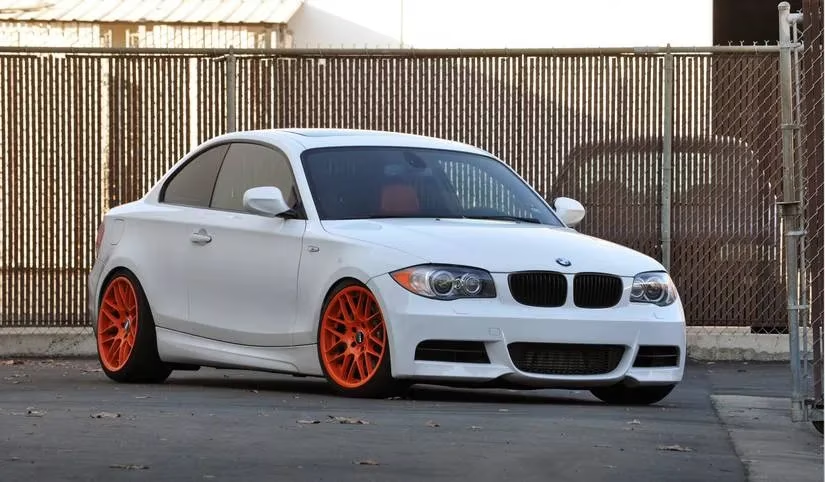
Flashiness isn't always about chrome. Sometimes, it's about a color choice that screams for attention in the wrong way. Take this white BMW 1 Series. The wheels themselves have a decent design, but that orange color? It sticks out like a hazard cone in a wedding photo. It matches nothing on the car's exterior. I'll grant, through the windshield, there seems to be an orange leather seat—a bold choice in itself. But that's not enough to anchor these wheels. A set in black, white, or even a dark grey would have complemented the car. This orange just feels like an afterthought that became the main thought, and not in a good way.
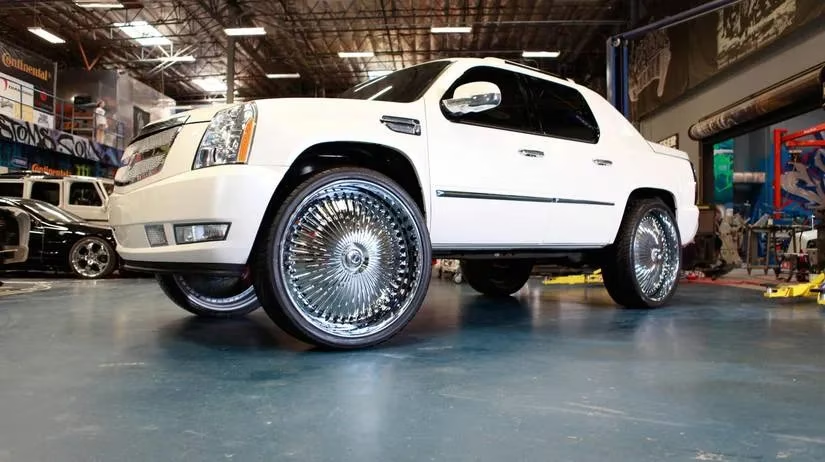
The Cadillac Escalade EXT, a luxury take on the Chevy Avalanche, is already a... distinctive vehicle. Some feel the need to amplify that distinction. Behold: the massive chrome spinner wheel. These are so large the tires look like rubber bands. A smaller chrome wheel with more sidewall could have worked, but this combination makes the truck look unbalanced and, frankly, a bit ridiculous. It's perched on these shiny discs like a prized ornament, losing any semblance of the utility it might have had. It's the automotive equivalent of wearing a diamond-encrusted watch to go gardening—it just doesn't fit the context.
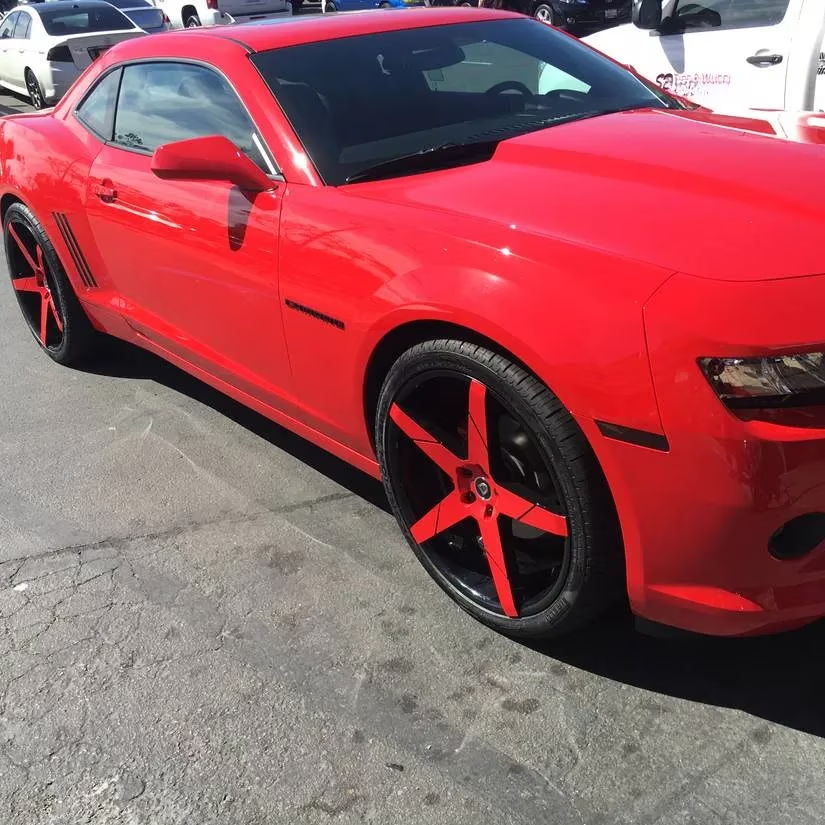
Color-matching can be cool. But it can also be a trap. This red Camaro owner fell into it. The red wheels, meant to match the body, end up looking like the car is blushing from embarrassment. The thin spokes and the stark black inner barrel create a weird visual effect where the wheels don't look cohesive. It feels like someone is trying too hard to create a 'theme.' A set of black or machined-finish wheels would have let the Camaro's aggressive lines and powerful engine (likely around 455 horsepower in this spec) speak for themselves. Sometimes, contrast is your friend.
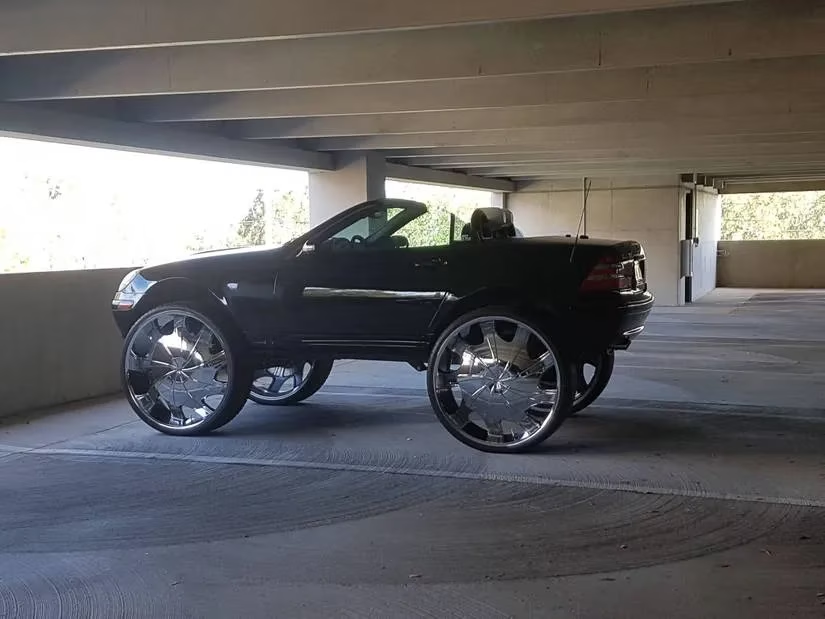
This Mercedes is infamous, and for good reason. This is the pinnacle of 'trying too hard.' The wheels are so large—likely 24-inch monsters designed for a pickup truck—that the owner probably had to surgically alter the wheel arches to make them fit. The car is lifted to accommodate them, destroying its sleek sedan proportions. Getting in and out must require a step ladder. It's a fascinating case study in how a single modification can completely dismantle a car's intended aesthetic and function. The original, cool-looking Mercedes is gone, replaced by something that looks permanently startled, its fenders stretched in a perpetual gasp.
Common Themes in Questionable Mods:
-
Ignoring Vehicle Purpose: Putting street wheels on off-roaders, or vice-versa.
-
Overdoing a Theme: Chrome everything, color-matching everything.
-
Sacrificing Proportion: Wheels that are too big or too small for the wheel wells.
-
Trend Chasing: Applying a modification style (like stancing) to a car that doesn't suit it.
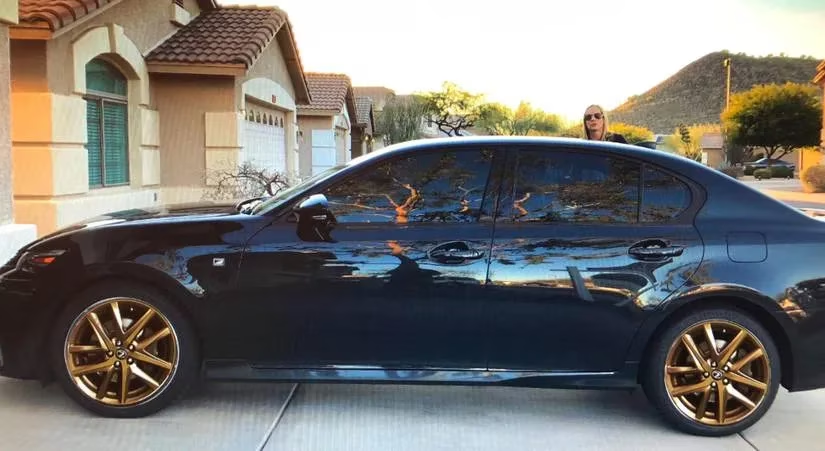
Here's another color misfire. Against this black car, these yellowish-gold wheels look like misplaced costume jewelry. Are they copper? Are they fake gold? It's hard to say, but they clash violently. The spoke design isn't bad, but the color choice ruins it. Chrome, black, or even a dark bronze would have been dramatic in a good way. This color just makes the car look unfinished, as if the owner ordered the wrong shade and decided to roll with it. It's a reminder that wheel color needs to be in dialogue with the car's paint, not in an argument with it.
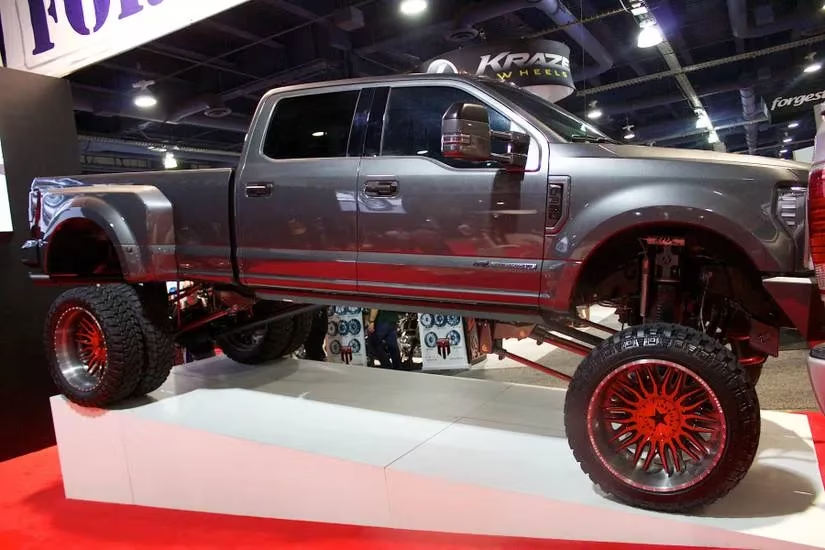
Normally, we pick on individual owners. This time, it's a professional build for the SEMA show that misses the mark. The truck is massively lifted, but the wheels and tires look comically small in the cavernous wheel arches. It creates a 'roller skate' effect that's unintentionally funny. The wheels themselves are flashy and intricate, but their scale is all wrong. They look lost. Beefier, larger tires would have filled the space and given the truck a commanding presence. Instead, it looks tippy and unbalanced, a showpiece that demonstrates how even experts can get proportions wrong.
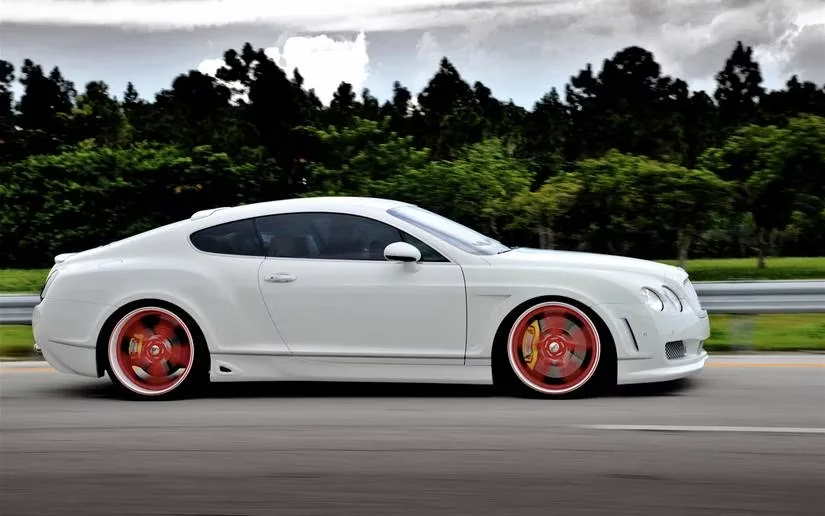
Finally, we have the Bentley. A masterpiece of luxury and engineering, a car that starts at over $200,000 and coddles you with every imaginable comfort. The factory wheels are designed by teams of engineers and stylists to perfectly complement the car's grandeur. So, why replace them? The aftermarket wheels on this white Continental GT, with their complex spokes and finish, don't harmonize with the car's flowing lines. They look aftermarket in the worst way—tacked on. They offset the elegant white paint so severely that even in motion, they'd likely look disjointed. It's like scrawling graffiti on a Renaissance painting; you're not improving it, you're just distracting from its inherent beauty.
Looking at all these examples from my perspective in 2026, the core lesson hasn't changed. Personalization is fantastic—it's what keeps car culture vibrant. But the best modifications are conversations with the car, not monologues imposed upon it. They enhance character, not bury it under chrome, mismatched colors, or ill-fitting parts. They respect the car's purpose. So, before you make that big change, take a step back. Listen to that inner voice. Your car—and the rest of us on the road—will thank you for it.
Leave a Comment
Comments