
Body Kits: From Cosmetic Flair to Performance Gains - A Driver's Personal Take
Ever looked at your perfectly fine, factory-standard car and thought, "This is nice, but... it's just a bit too... normal"? Yeah, me too. That's the itch a body kit is designed to scratch. We're not all content with rolling off the dealership lot in what everyone else has. For us, the car is a canvas, and body kits are our boldest paints and brushes. But let's be real, is slapping on a widebody kit and a giant spoiler just about turning heads at the local car meet, or does it actually make the car better? I've spent some time diving into this world, and let me tell you, it's a wild ride of form, function, and sometimes, pure folly.
So, What Exactly IS a Body Kit? 🧩
At its core, a body kit is a collection of aftermarket parts that replace or augment your car's original body panels. We're talking about:
-
Extended Front & Rear Bumpers: For that aggressive, 'ready-to-pounce' look.
-
Side Skirts: Those sleek panels that run along the bottom of the doors, making the car look like it's trying to become one with the asphalt.
-
Spoilers & Wings: From subtle lips to aircraft-carrier-sized appendages.
-
Bonnet/Roof Scoops: For style, or theoretically, for feeding air to something hungry underneath.
These pieces can be made from fiberglass, polyurethane, or the holy grail: carbon fiber. While most people color-match to their factory paint, the truly adventurous go for neon greens or chrome wraps. The question is, beyond the visual drama, what's the point?
Performance or Pose? The Eternal Debate ⚖️
Here's the thing: body kits started with performance in mind. Lowering the car and adding side skirts can improve aerodynamics, increasing downforce for better stability at high speeds. A well-designed front bumper can channel air more efficiently to radiators and brakes.
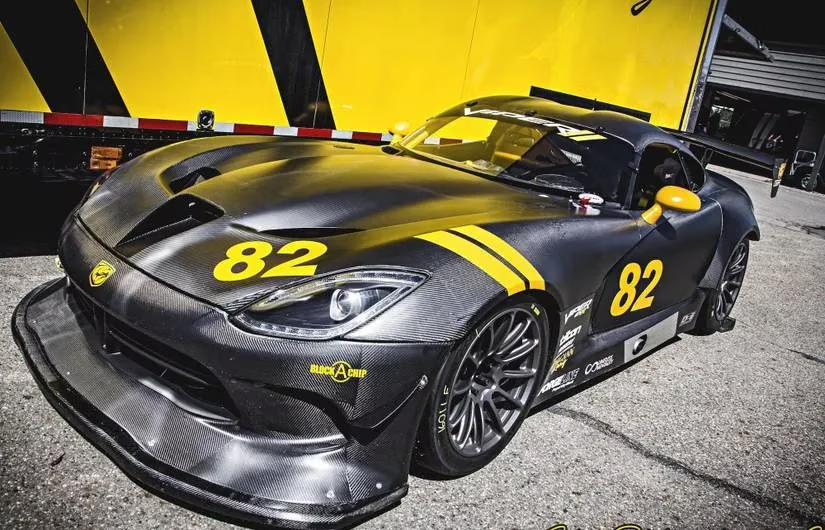
But – and it's a big but – as the aftermarket industry has exploded, the focus for many kits has shifted overwhelmingly to aesthetics. Manufacturers often do minimal aerodynamic testing. So, that enormous rear wing you bolted on? It might be creating so much drag it actually slows you down, or worse, causes lift at high speeds! Sometimes, less is more. A modest, functional spoiler on a Honda S2000 can work wonders, while a barn door strapped to the trunk... not so much.
The Good, The Bad, and The Scraped-Underside 😬
Let's break down the pros and cons from a driver's perspective.
| Pros 👍 | Cons 👎 |
|---|---|
| Unique Style: Stand out in a sea of sameness. | Cost: Quality kits + professional paint/install = $$$. |
| Potential Performance Gains: Improved aerodynamics & stability. | Practicality Nightmare: Speed bumps become your mortal enemy. Parking is a strategic puzzle. |
| Personal Expression: Your car becomes a true extension of you. | Questionable Quality: Cheap kits can crack, warp, or fit poorly. |
| Resale Value?: For a truly iconic build, maybe. For most, it hurts value. | Increased Attention: From both admirers and law enforcement. |
Global Flavors of Modification 🌏
Body kit culture isn't monolithic. It has distinct regional personalities:
-
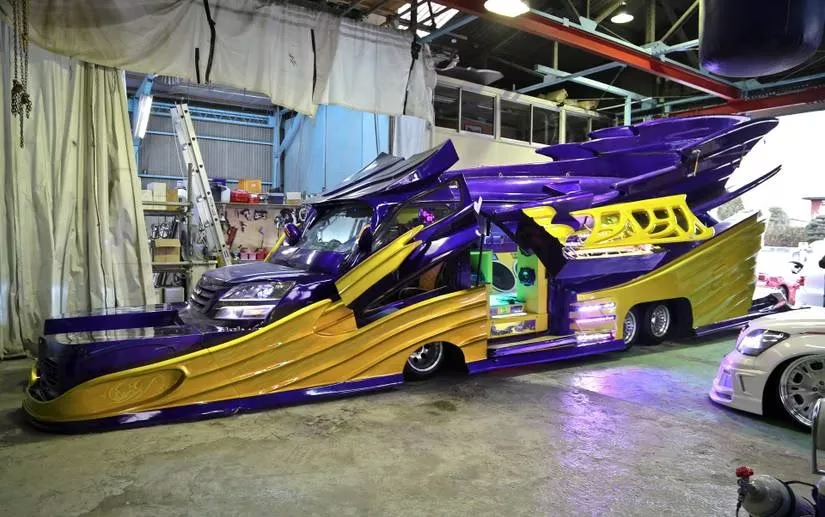
The Japanese Art Form: When we talk about pushing boundaries, Japan is in a league of its own. Enter Bosozoku. Originating from motorcycle gangs, this style is about outrageous, almost cartoonish modification. Think:
-
Comically oversized bumpers that jut out feet in front of the car.
-
Piping-exhausts that look like trumpet sections.
-
Wild paint jobs and extreme lowriders.
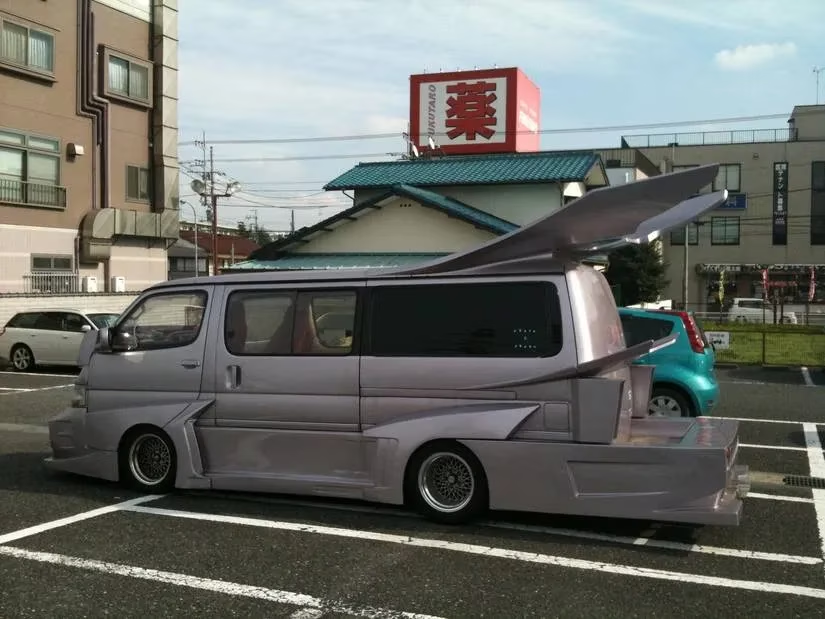
The beauty is, it's not just for sports cars. I've seen Toyota minivans and humble HiAce workhorses transformed into rolling works of Bosozoku art. It's a philosophy, not just a modification.
-
-
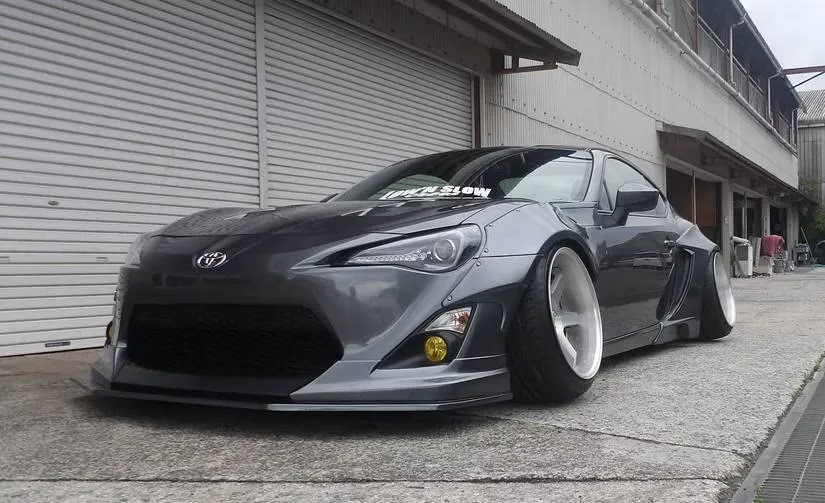
The Widebody Warrior: Popular worldwide, this is about adding muscular fender flares to house wider wheels and tires. It gives any car, from a humble Toyota coupe to a mighty Dodge Viper, an incredibly planted, aggressive stance. It's often paired with negative camber wheels (where the tops of the wheels tilt inward), a trend straight out of Japanese street culture.
-
The Luxury Re-sculptor: Why modify a luxury car? Because some owners think even Lexus or BMW designers left some drama on the table. Adding a body kit to a Lexus RC-F, for instance, is about taking an already stunning sports coupe and making it a one-of-a-kind head-turner, often with luxurious paint finishes to match.
It's Not Just for Gas Guzzlers! ⚡
Think body kits are only for roaring V8s? Think again! The eco-conscious crowd wants to look good too. I've seen modified Toyota Prius models with sleek kits that prove efficiency and style aren't mutually exclusive. It sends a message: "I care about the planet, but I also care about apexing this corner with flair."
Final Thoughts: Should You Do It?
As we cruise through 2026, the body kit scene is more diverse than ever. From subtle lip kits to full Bosozoku transformations, the options are endless. Before you take the plunge, ask yourself:
-
What's my goal? Pure looks, actual track performance, or cultural expression?
-
What's my budget? Remember to factor in installation and painting, which can cost more than the kit itself.
-
Can I live with it? Are you ready to crawl over speed bumps at a 45-degree angle and spend 20 minutes parallel parking?
For me, the appeal is undeniable. It's the ultimate form of automotive self-expression. Whether it's the raw, wide-bodied aggression of a Viper or the rebellious, artistic chaos of a Bosozoku van, a body kit screams that the driver didn't just buy a car—they built a statement. Just maybe... make sure that statement includes good aerodynamics.
Leave a Comment
Comments