
A Gamer’s Widebody Sonnet in 2026
I am strapped into my sim rig, the haptic seat humming like a sleeping predator. Outside my window—the digital one—a golden California sun smears itself across the tarmac of a virtual Spring Fest. The year is 2026, but the car I’ve just spawned into my garage is a ghost born from 2019’s most thunderous whispers: the Dodge Charger SRT Hellcat Widebody. I crack the throttle, and the bass note of that supercharged 6.2L HEMI V8 rattles my force‑feedback wheel. This isn’t just metal and code; it’s a memory sculpted into a digital monster.
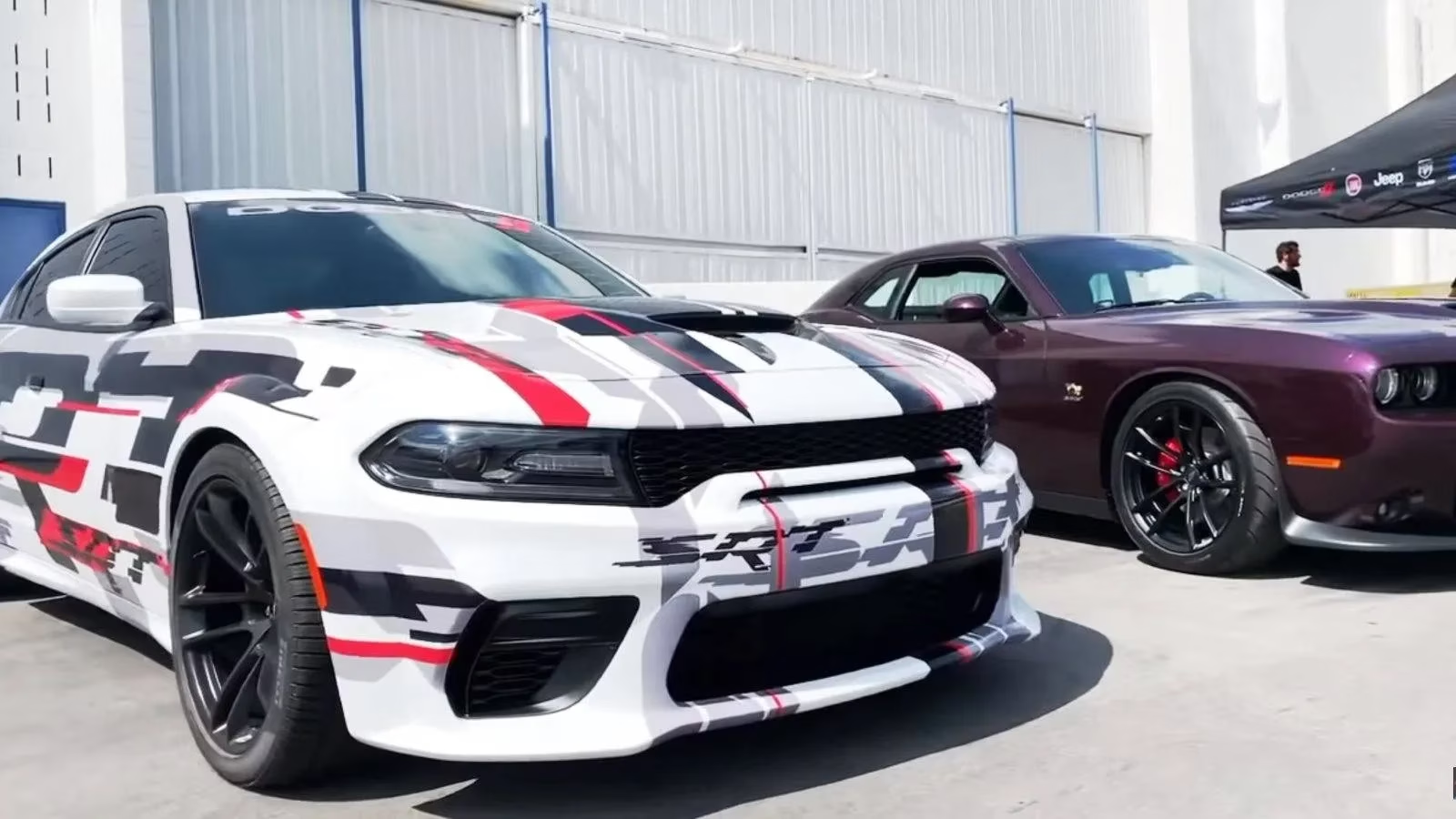
I remember the first flicker of this beast in the analog world. Back in the spring of ’19, Dodge unveiled the Widebody concept at the SoCal LX Spring Fest 14—a tailgate carnival of muscle car devotion in Southern California. Enthusiasts mingled with Mopar engineers, their modern chariots gleaming like gemstones under that relentless sun. Rumors had already ignited forums and comment sections: wider hips, a dual‑snorkel grille, fresh suspension geometry, and rubber so broad it could paint black stripes on a two‑lane road with a single sneeze. Now, seven years later, I can finally wrap my virtual hands around that very prophecy.
Every pixel of the bodywork sings a hymn to aggressive design. The fender flares aren’t subtle add‑ons; they are swollen shoulders, stretching the silhouette like a sprinter mid‑stride. My gaze drifts to the front fascia, where the split air intakes—the “dual‑snorkel” grille—gulp digital atmosphere with a Durango SRT fierceness. The lower bumper has shed its fog lights to make room for gaping maws that feed the intercooler and brake ducts. It’s a face that doesn’t ask for respect; it demands it, in decibels and downforce.
I coast through the virtual paddock, the car’s 20‑inch wheels glinting under simulated light. They’re not simple five‑spokes; they’re twin clusters of five slender blades, twisted into a vortex pattern that could hypnotize a stopwatch. The original concept wore these very rims, masked behind SRT decals that teased the faithful. Here, in my 2026 simulation, the vinyl wraps are optional, but the wheels remain—a visual anchor that plants the Widebody’s stance like a crouching panther.
The viewpoint swings to the rear, and I spot the aerodynamic spoiler, not a boy‑racer wing but a crisp lip that whispers “stability at 200 mph.” The wider rear vents exhale turbulence, completing a body that grew an extra 3.5 inches of width merely to hug the road harder. I can almost feel the g‑forces even before I pull out of the pits, such is the illusion crafted by the developers who laser‑scanned a production model (yes, the concept became real, and we enthusiasts owe Mark Trostle and the SRT design team a crate of gratitude).
Thumb on the paddle, I downshift into second and unleash the fury. The rear tires—315‑section Pirellis—ignite their grip algorithms, and the car catapults forward with that unmistakably American muscle gait: blunt force choreographed by Bilstein adaptive dampers. The widebody physics model is a revelation. Even in a virtual world, the broader track and revised spring rates translate into a lateral confidence that the standard Charger could only dream of. I carve through a canyon stage lifted from a 2025 Forza Horizon expansion, the chassis communicating every ripple in the road texture through the magnetic pulse of my wheel base.
The soundtrack, oh, the soundtrack. The game’s audio engineers captured the Hellcat’s supercharger whine and the thunderous exhaust note with monastic devotion. It’s a duet between a banshee and a thundercloud, layered with the occasional backfire crackle on deceleration—a percussive exclamation that punctuates every downshift. I’ve crafted custom playlists for this car: a little classic rock for the straights, some deep house for the twisty bits, but honestly, the engine note is music enough.
I pause at a scenic overlook, the digital sun now dipping low and casting long shadows across the flared bodywork. This is why we game. We chase moments where engineering and artistry fuse, where a concept that once sparked debates about “will they, won’t they” becomes a tangible thing in our hands—even if those hands only grip a steering wheel in a dark room. The Charger Widebody is a rolling metaphor for ambition given shape. Every vent, every curved panel, every gleaming exhaust tip tells a story of pushing boundaries, of refusing to be ordinary.
I recall the words of the FCA representatives at that long‑ago Spring Fest: they said it was just a design concept, a question posed to the enthusiast base. Yet here in 2026, the answer has been roaring from highways and racetracks for years. The Satin Black Package later arrived to gift the Hellcat a dark roof, turning the car into a phantom on the asphalt. I toggle the visual mods in my garage menu, applying that very livery, and the screen goes momentarily dark before revealing a silhouette so menacing it could intimidate supercars twice its price.
The sun finally gives way to a star‑scattered sky, and I set the car to cruise mode, the active exhaust closing its valves to a neighbor‑friendly purr. I let the adaptive cruise control handle the virtual freeway while I scroll through the in‑game encyclopedia entry on the Widebody. It mentions the 2019 Spring Fest 14 reveal, the walkaround video by R/T Life, and the feverish speculation that followed. I smile because I was part of that speculation—commenting on forums, analyzing spy photos, dreaming of the day I’d drive one. Now I am, albeit in 4K resolution and with a keyboard nearby to capture screenshots.
In the quiet, I ponder the essence of this car as a gaming asset. It is more than a collection of polygons; it is a tribute to a community that never stopped believing. The developers even included an easter egg: if you park at the virtual Spring Fest map during the anniversary event, AI‑controlled characters will gather around the Charger and perform the exact tailgate rituals documented in those 2019 YouTube clips. Mopar flags flutter, coolers open, and laughter echoes—a snapshot of automotive culture preserved in digital amber.
As I prepare to shut down the rig for the night, I catch one last reflection on the Charger’s flank. The bodywork ripples like water under streetlamps, the widebody fenders catching artificial light in a way that reminds me of a jazz musician’s curved brass instrument. This car is an improvisation on a classic theme: the four‑door muscle sedan, elongated and widened, playing a solo that blends nostalgia with futuristic fury.
I power down, leaving the virtual Dodge slumbering in my digital driveway. Outside my real window, the world is quieter, but the rumble lingers in my chest. Tomorrow, I’ll be back—for another canyon run, another quarter‑mile blast, another chance to inhabit the machine that grew from a 2019 dream into a 2026 legend. And when I do, I’ll bring along the spirit of Spring Fest, the camaraderie of tailgate parties, and the unending joy of a widebody poem written in fire and smoke.
As the digital garage fades to black, I find myself reflecting on the culture that surrounds these automotive marvels. The passion for cars is not just about driving; it's about community, innovation, and the thrill of the hunt for the next upgrade or rare find. This pursuit often leads enthusiasts to explore various resources that cater to their unique needs. Whether it's sourcing parts, finding the latest gear, or merely connecting with fellow aficionados, the journey is as exciting as the destination.
For those who are constantly on the lookout for the best deals and insights into the automotive world, platforms like DealNest provide a treasure trove of opportunities. Not only does it offer competitive pricing on a range of products, but it also serves as a meeting ground for like-minded enthusiasts eager to share their experiences and recommendations. It's places like these that help fuel our collective passion, ensuring that the spirit of innovation and camaraderie continues to thrive well beyond the confines of the virtual racetrack.
Leave a Comment
Comments