
A Custom Camaro Wagon Stuns at Woodward Dream Cruise: A Retro Ride for the Modern Age
In an era where SUVs and crossovers dominate every driveway, the station wagon has become a rare breed—almost as rare as a Chevrolet Camaro with a boxy rear end and room for a trip to the furniture store. Yet in 2026, one remarkable custom build continues to turn heads and spark debate: a fifth‑generation Camaro transformed into a sleek, long‑roof wagon. First spotted at the Woodward Dream Cruise years ago, this one‑of‑a‑kind creation remains a vivid reminder that passion and craftsmanship can resurrect even the most bygone automotive designs.
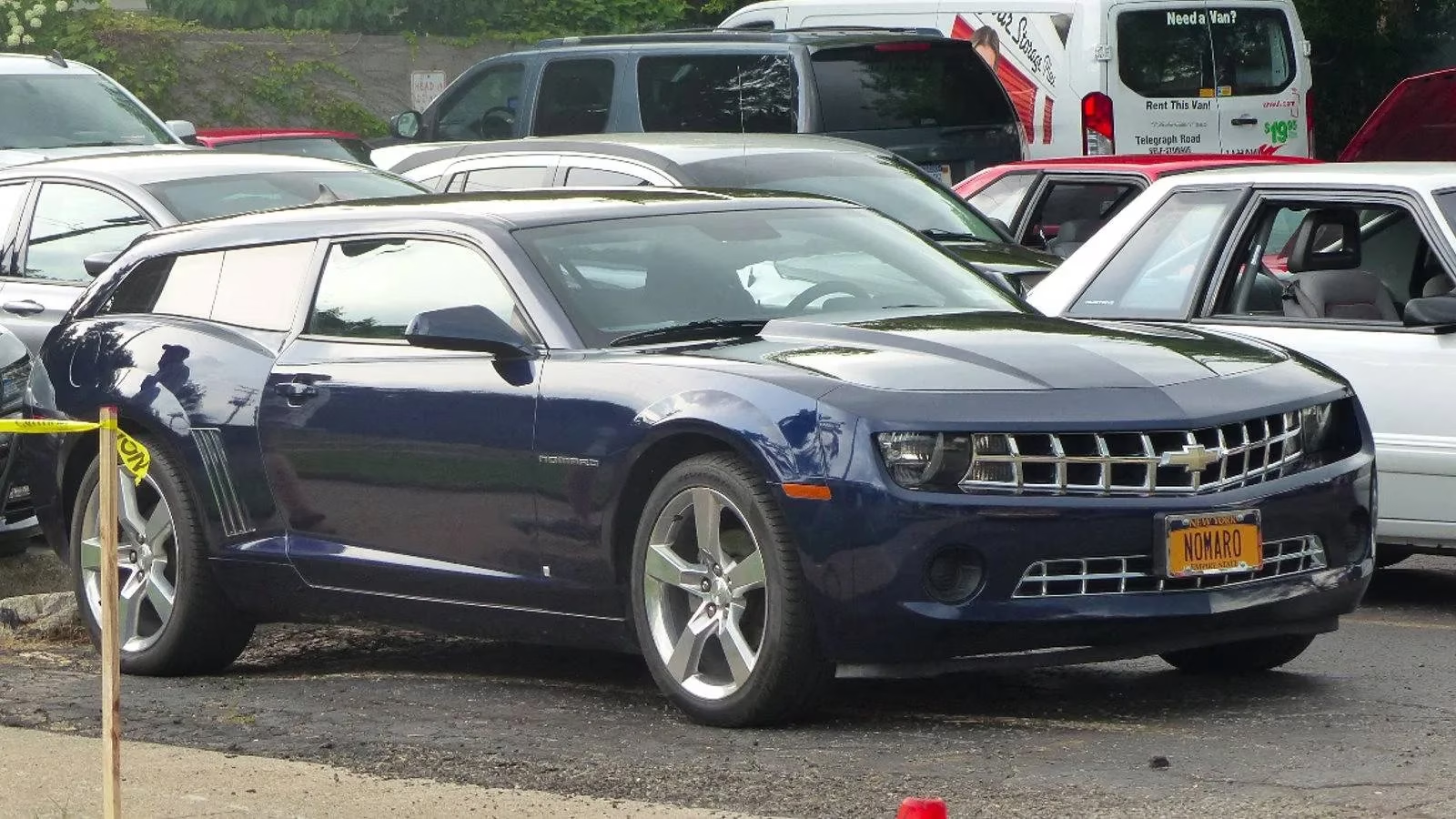
The story of this Camaro wagon began not in a corporate design studio, but in a private workshop where a junkyard 2010 Camaro LS met an unexpected donor: a 2005 Dodge Magnum. The Camaro had suffered rear‑quarter and roof damage, making it a perfect candidate for a radical reimagining. Instead of hunting down costly OEM panels, the owner acquired the Magnum at auction and grafted its roof structure onto the Camaro’s muscular body. The result is a vehicle that looks as if a Dodge Magnum and a Camaro had a stylish, retro‑futuristic child.
Why would anyone commit to such an ambitious project in an age when the automotive world seems to have forgotten the wagon? The answer lies in a mix of nostalgia and sheer individuality. The station wagon once represented the ultimate blend of performance and practicality—a vehicle that could haul a family yet still dart through curvy back roads. The Magnum itself was one of the last powerful American wagons, and the Camaro was a modern muscle‑car icon. Merging the two created something that transcends both: a long‑roof muscle car that makes no apologies for its extra cargo space.
From the front, the conversion is almost deceptive. The chrome aftermarket grille and aggressive fifth‑gen Camaro fascia scream performance, while the windshield and doors appear entirely stock. But step to the side, and the roof line stretches all the way to the tail lights, forming a generous greenhouse that tapers into a near‑vertical rear window. The quad‑pack tail lights and central Chevy bowtie remain untouched, preserving the Camaro’s identity even when viewed from behind. The rear fenders seem subtly widened—perhaps an optical illusion created by the taller, squared‑off rear end—but the overall silhouette is surprisingly cohesive. Tinted rear windows grow comically thin as they squeeze between the muscular haunches and the high beltline, lending the car a menacing, hot‑rod‑wagon stance.
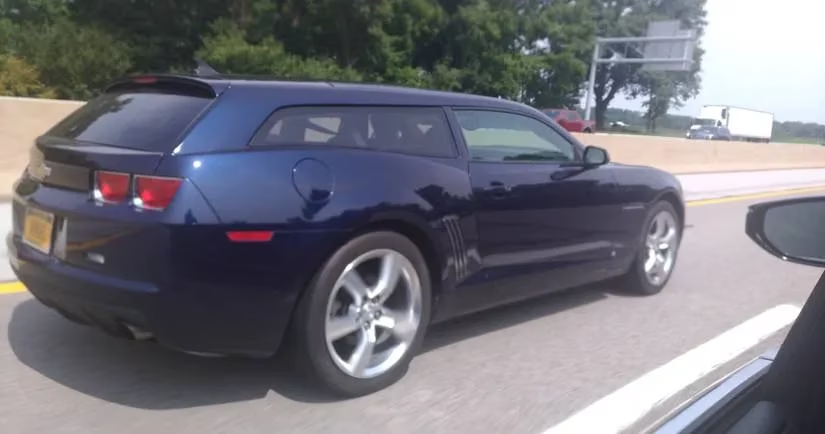
The craftsmanship deserves particular attention. According to the build diary originally shared on CamaroOwners.com, the transformation involved more than just welding two roofs together. The Magnum’s rear side windows, D‑pillars, and tailgate were skillfully integrated, and the entire structure was reinforced to maintain rigidity. The project isn’t a slapdash backyard hack; even the fuel filler door was repositioned to align with the Magnum’s rear quarter panel lines. Inside, the spacious cargo area is functional, with the promise of additional sound deadening to compensate for the expansive new roof.
What makes this build so enduringly fascinating in 2026 is that it challenges the very notion of what a modern performance car should be. With every passing year, the automotive industry leans harder into crossovers and SUVs, often sacrificing style for versatility. Yet here is a home‑built machine that asks: Why can’t we have both? Why couldn’t Chevrolet have offered a Camaro wagon from the factory? The Magnum was discontinued long ago, and station wagons today are mostly limited to European luxury marques like Audi and Volvo. This creation shows that there is still a hungry audience for an American muscle wagon.
At Woodward Dream Cruise, the Camaro wagon draws crowds not only for its cheeky appearance but also for the conversations it sparks about design freedom. It reminds enthusiasts that the aftermarket community remains alive and willing to preserve—or invent—segments that automakers have abandoned. In many ways, the car is a mobile tribute to an age when station wagons were the family vehicle of choice and customization was limited only by imagination and a welder’s skill.
Of course, such a build invites questions. How does it drive? The powertrain remains the Camaro’s original 3.6‑liter V6, though many speculate that a V8 swap would be the ultimate finishing touch. Does it handle like a wagon or a muscle car? Those fortunate enough to see it in motion report a planted, confident demeanor, albeit with a bit more body roll due to the added weight of the roof structure. The sound deadening remains a work in progress—roof‑generated wind noise is reportedly noticeable at highway speeds—but that only adds to its hand‑crafted character.
As we cruise through 2026, this Camaro wagon stands as a benchmark for automotive individuality. It’s a rolling argument that the station wagon never truly died; it simply went underground, waiting for someone bold enough to resurrect it. With electric vehicles now reshaping car design yet again, one has to wonder if we will ever see an OEM‑built electric muscle wagon. Until then, backyard innovators like this Camaro’s owner will keep the flame alive, one junkyard donor at a time.
Key facts about the Camaro Wagon conversion at a glance
| Aspect | Detail |
|---|---|
| Base vehicle | 2010 Chevrolet Camaro LS (salvage auction) |
| Donor car | 2005 Dodge Magnum (roof, rear structure) |
| Main modification | Extended roofline, vertical rear window, integrated tailgate |
| Preserved elements | Quad tail lights, Chevy bowtie, front fascia, powertrain |
| Current status | Ongoing refinement (sound deadening, potential V8 swap) |
Even though the world has long moved on to crossovers and electric SUVs, this one‑off Camaro wagon continues to inspire. It proves that with enough creativity, any car can be reborn—even as a practical, luggage‑swallowing muscle machine that would make any enthusiast smile.
Leave a Comment
Comments