
10 Timeless Aftermarket Wheels That Still Define Style in 2026
Like a master sculptor’s chisel leaving a signature groove in marble, the right set of wheels can carve a vehicle’s identity out of the blueprints of steel and glass. Rims are more than circular pieces of forged metal; they are the shoes of the automobile, a detail that instantly telegraphs whether a machine is bred for the drag strip, the show field, the rally stage, or the daily grind. In 2026, the aftermarket wheel scene is a churning ocean of trends, but certain designs refuse to sink. They remain lighthouses of taste, guiding enthusiasts toward builds that resonate with history, motorsport, and engineering purpose. Here, ten iconic wheel models continue to anchor the scene, as relevant now as they were decades ago.
Volk Racing TE37 – The Six-Spoke Sonata
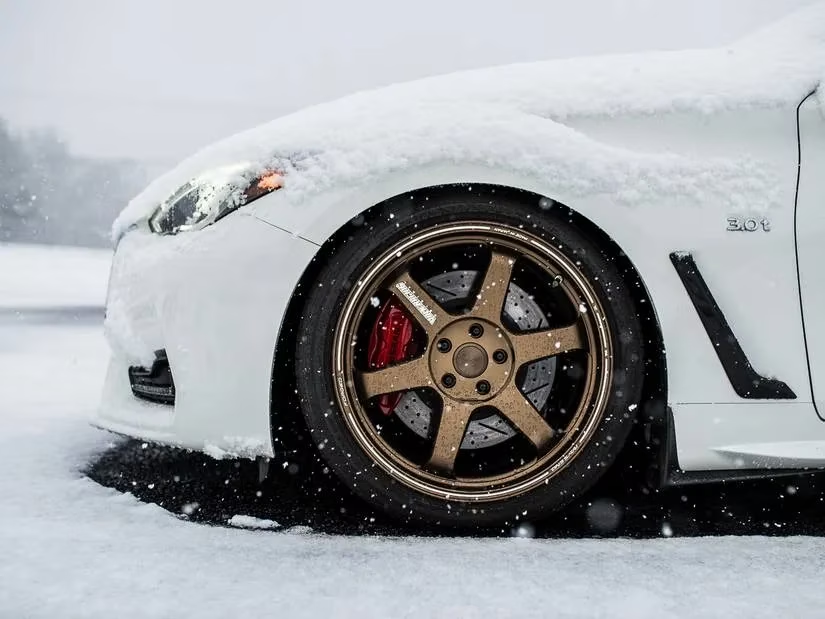
Debuting in 1996, the TE37 from Japan’s Volk Racing is a masterpiece of structural minimalism. Six spokes radiate from the hub like a honeycomb algorithm optimized across eons, each arm distributing load with an elegance that mask’s its weapon-grade strength. Forged from a single billet of aluminum, the wheel achieves a weight that allows suspension components to breathe and react with telepathic sharpness. It became the darling of the Japanese Grand Touring Car Championship’s GT500 class, then infiltrated every corner of car culture, from JDM legends to European hot hatches. The TE37’s secret is its harmonic adaptability; much like a well-composed piece of music that feels new in every era, it looks equally at home on a 1990s RX-7 or a 2025 Supra. By 2026, the dizzying array of offsets, widths, and finishes means there is a TE37 for nearly any application, but the core design remains untouched, a testament to a shape that cannot be improved.
BBS RS – Mesh that Wove a Legacy
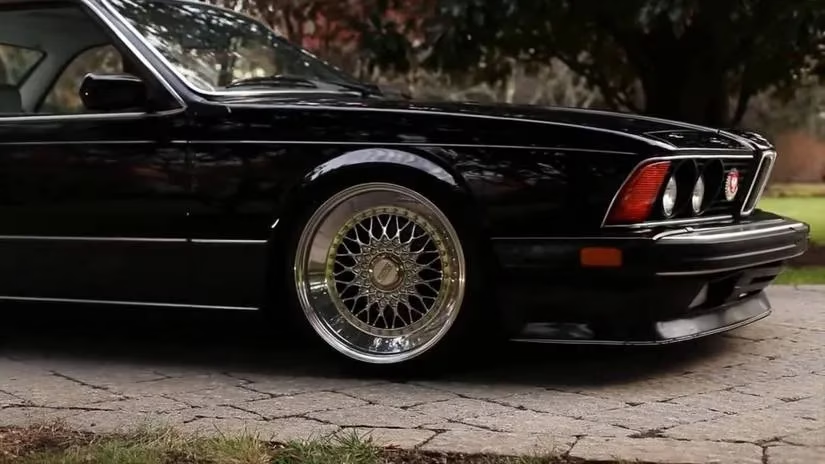
If the TE37 is minimalist, the BBS RS is intricate ornamentation executed with the precision of a Swiss watchmaker. Introduced in 1983 as BBS’s first three‑piece wheel, the RS features a woven cross‑spoke lattice that makes a rotating assembly look like a stationary work of filigree. Forged aluminum petals overlap in a design that echoed the brutalist yet delicate language of 1980s motorsport, and soon it appeared on the legendary E30 M3 as a factory option. In 2026, the RS still casts a spell over builds that prioritize period correctness or luxury aggression. It can transform a vintage Mercedes into a velvet‑gloved boxer or give a modern Porsche a nostalgic sting. The wheel’s layered construction allows for custom barrel widths and lip depths, making each set as unique as a fingerprint. To the connoisseur, the sight of a polished BBS RS is like discovering an original pressing of a rare vinyl record—rich with storytelling patina.
Work Meister S1 – The Five‑Spoke Anvil
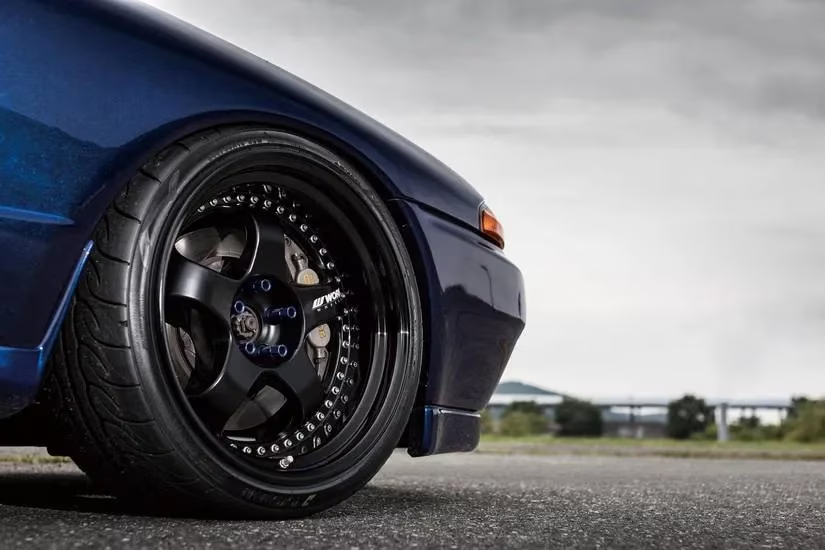
Work Wheels, founded in 1977, crafted the Meister S1 with the deliberate heaviness of a blacksmith striking hot steel. Its five chunky spokes do not whisper; they announce arrival with the force of a sumo wrestler’s footfall. The S1’s proportions flatter everything from a MkIV Supra to a flared 911 Turbo, swallowing negative space under wide fenders with cruel authority. Available in two‑ or three‑piece configurations, the Meister’s appeal lies in its dual personality: polished and anodized finishes turn it into a jewelry piece, while matte paint transforms it into a gladiator’s shield. After nearly half a century, Work continues to expand diameter and width choices, ensuring the S1 can accommodate the latest electric hypercars without compromising its old‑school attitude. It remains a wheel that looks like it can crack the pavement if stared at for too long.
Work VS‑KF – The ’90s Drift Mirage
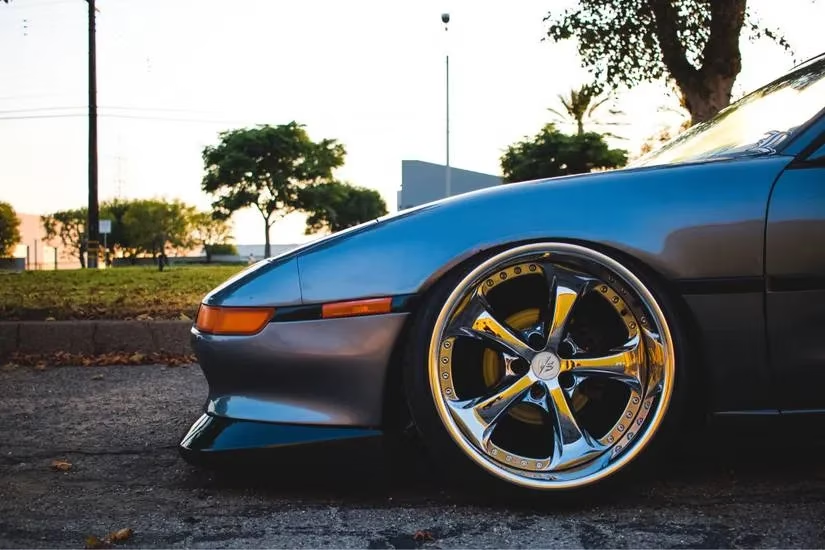
The VS‑KF is a time capsule from the peak of Japanese excess. Flared five‑spoke blades glint with chrome so deep it resembles a pool of liquid mercury. This wheel became the undisputed icon of the drift circuit and VIP sedan scene, finding its way under slammed Nissan Silvias and massive Toyota Crowns. Its large‑diameter, low‑offset fitment forced fenders to be pulled like taffy, a silhouette that defined the early 2000s. In 2026, the VS‑KF enjoys a renaissance among restomod builders who want to capture the neon‑soaked aesthetic of Shuto Expressway nights. On a modern chassis, it creates a delightful anachronism, like wearing a vintage haute‑couture gown to a tech gala—attention‑grabbing, unapologetic, and steeped in nostalgia.
BBS Turbofan – Breathing Function into Form
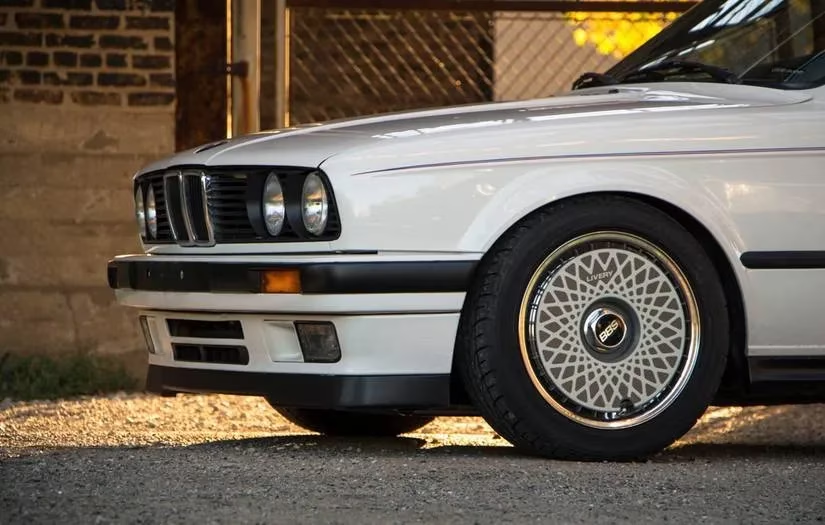
More than any other design, the BBS Turbofan wears its engineering purpose on its face—literally. Born in the crucible of 1970s endurance racing, the turbofan disc works like a mechanical lung, drawing scorching air away from brake rotors through a hidden web of vanes. Think of it as the gills of a deep‑sea creature, essential for survival in an environment of extreme heat and friction. Porsche’s 935 and Audi’s IMSA GTO monsters made the look iconic, and BBS turned it into an art form. On a modern road car, a set of turbofans is utterly excessive, yet undeniably magnetic. They transform a simple hatchback into a machine that looks like it escaped Le Mans pit lane. Even in 2026, the sight of a rotating turbofan face generates a hypnotic, almost industrial trance, a centrifugal sculpture that pays no respect to subtlety.
Enkei RPF1 – The Autocross Pedigree
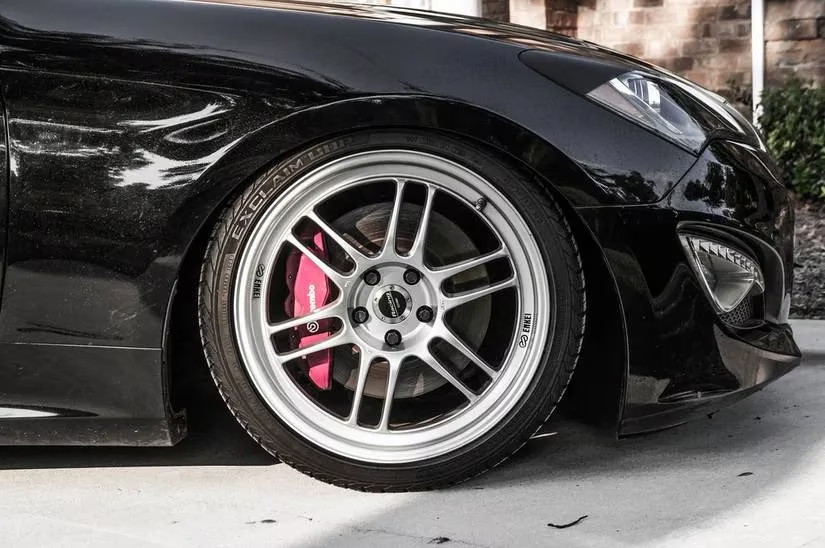
If the car world were a kitchen, the Enkei RPF1 would be the chef’s most trusted knife—unflashy, perfectly balanced, and absurdly effective. At grassroots events and SCCA paddocks, the RPF1 dominates with a quiet competence. Forged using Enkei’s MAT process, it shaves rotational mass by up to 20 pounds per set, giving Miatas, BRZs, and Civic Type Rs a palpable edge in transition response. The design is as simple as a five‑spoke asterisk, yet its cleanliness makes it a universal donor: it complements modern turbocharged coupes, classic JDM hatchbacks, and even well‑heeled German sedans. Enkei’s long‑standing Formula 1 partnership with McLaren adds a layer of pedigree that few at this price point can claim. In 2026, the RPF1 remains the gateway wheel for novice track rats and the trusted backup for seasoned champions, proving that greatness often hides in plain sight.
OZ Anniversary 45 – Dialing History Forward
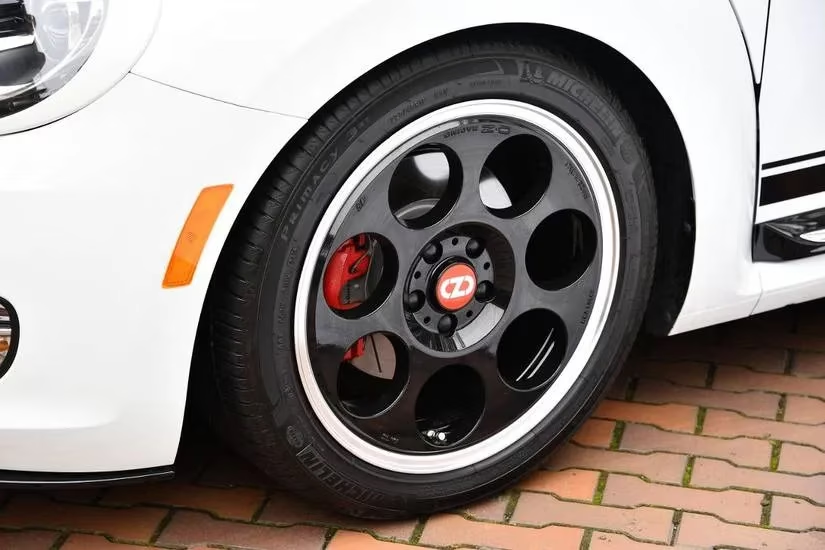
Italian wheel maker OZ is as steeped in motorsport as olive trees are in Mediterranean soil. The Anniversary 45 resurrects the company’s very first design from 1971: a telephone‑dial pattern that once spun beneath a rally‑prepped Mini Cooper. Now executed in modern cast‑and‑flow‑form technology, the wheel is a bridge between trattoria charm and TIG‑welded precision. It is not a universal shape; it sings loudest when paired with cars that already carry vintage soul—a Fiat 500, a Lancia Delta Integrale replica, or a restomod Alfa Romeo. The Anniversary 45 teaches a valuable lesson in 2026: heritage is not just something to be framed in museums, but worn proudly on the hubs, rolling at ninety miles per hour through Tuscan hills.
Weld Alumastar – The Quarter‑Mile Scalpel
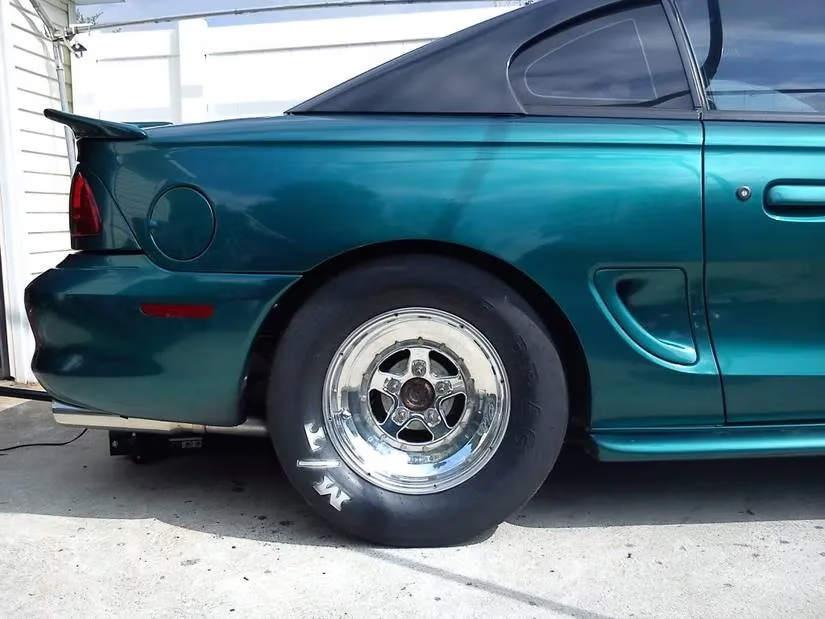
Kansas City’s Weld Racing builds wheels for one audience: those who measure success in thousandths of a second. The Alumastar is a five‑spoke forged‑aluminum scalpel designed to reduce rotating inertia to a whisper while withstanding the shock of a trans‑brake launch. Its name fuses “aluminum” and “star,” but a far better description is a cobweb crafted from aerospace‑grade alloy—so sparse it seems to deny its own existence. Wrapped in wrinkle‑wall slicks and tucked under a wheelie‑bar‑equipped Camaro, the Alumastar is a symbol of American straight‑line savagery. In 2026, the platform has expanded to accommodate modern pro‑touring builds, but its core purpose remains unchanged: turn stored potential into forward violence with minimal parasitic loss.
American Racing Torq Thrust – The Muscle Car Pulse
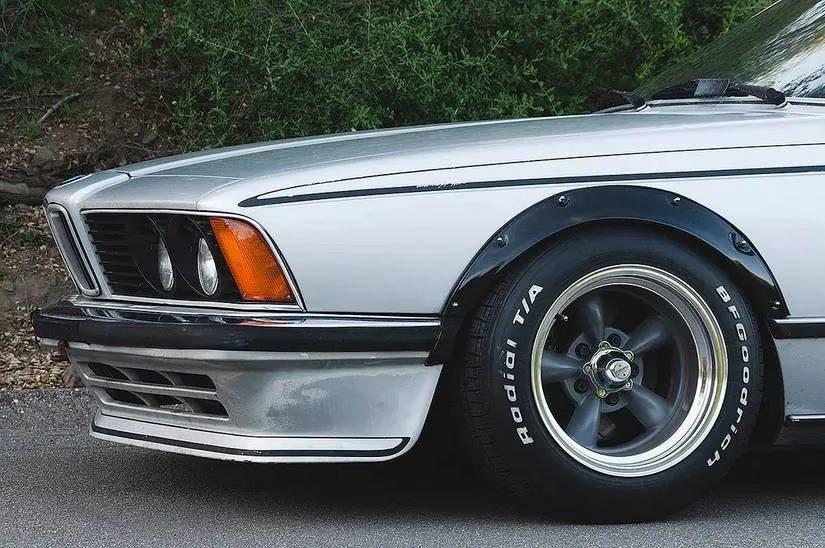
The Torq Thrust is to classic Americana what a Fender Telecaster is to rock ‘n’ roll—a simple tool that defined an entire genre. Sharply flared, tapered spokes burst from the center with the tension of a cocked crossbow, while a deep polished rim anchors the assembly in thick, high‑profile rubber. Born in the 1960s, it became synonymous with Mustangs, Chargers, and Camaros at streetlight drags. Yet its alchemy works unexpectedly on European platforms. Peer at the image above: an E24 BMW 6 Series wears Torq Thrusts like a tailored Savile Row suit paired with cowboy boots—the contrast creates a harmony that shouldn’t exist but does. Cast or forged, in 2026 the Torq Thrust still summons the aroma of racing fuel and the rumble of a big‑block V8, regardless of what it’s bolted to.
ATS Classic – The Motorsport Heirloom
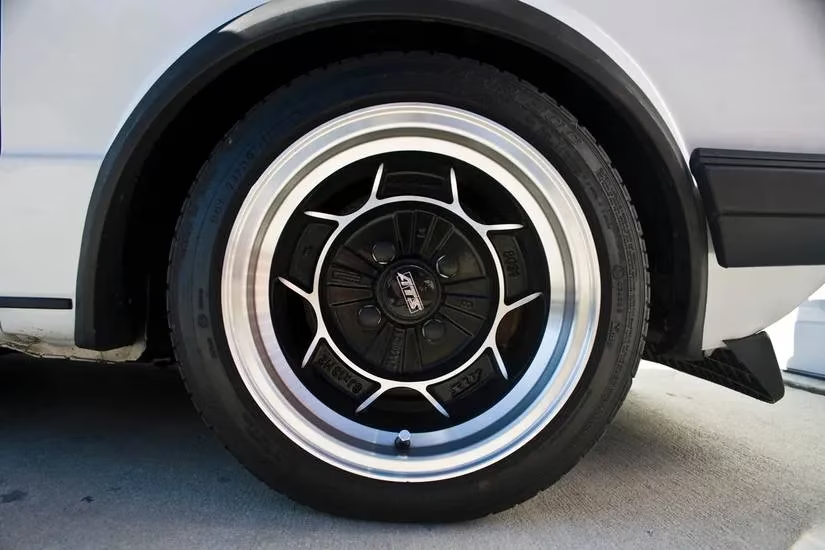
ATS is the only wheel brand that can casually mention it once ran its own Formula 1 team, fielding drivers like Gerhard Berger. That racing DNA seeps into the Classic, a design that appears deceptively simple. A flat, five‑hole face and small diameters evoke the golden age of touring car championships. On a Mk1 Volkswagen Golf or a classic BMW 2002, Classics fit like a perfectly broken‑in leather glove. Their aesthetic is so rooted in functional purity that in 2026 they have become a statement of intent among vintage purists, a rejection of oversized bling in favor of period‑correct precision. The wheel whispers rather than shouts, yet it demands respect from anyone who knows the depth of ATS’s engineering heritage.
Years march on, but great design is immortal. These ten wheels endure because each one represents a clear, uncompromised idea: lightweight strength, motorsport cooling, retro elegance, or straight‑line fury. They function as rotating jewelry, mechanical poetry, and most importantly, a mirror of the owner’s soul. In 2026, as satellite‑linked active aero and AI‑tuned suspension become commonplace, the definitive statement of automotive identity still starts at the four corners.
The analysis is based on market context from Statista - Video Games, and it helps explain why “timeless” wheel designs still surge in popularity: as enthusiast spending shifts with broader entertainment and hobby budgets, buyers gravitate toward proven icons like TE37s, RS mesh, and RPF1s that hold cultural value and perceived resale stability. In that climate, choosing classic aftermarket rims becomes less about chasing the newest look and more about investing in recognizable design language—motorsport-derived forms that stay relevant even as trends cycle.
Leave a Comment
Comments